

Your First Postpartum Period: What to Expect
There are many things to love about pregnancy. Another is that you’ll have at least nine months of freedom from your period. But after you deliver, you’re probably curious about what will happen with your menstrual cycle. After its months-long hiatus, your postpartum period might return with a vengeance—or a whisper—and stay that way for years.
When your period returns often depend on whether or not you breastfeed. And just like your life after baby, you might find your periods after pregnancy is somewhat different.
When will my period return?
There are several factors that affect the return of your menstrual cycle, but most women will experience their first period between six to eight weeks after childbirth if you are not breastfeeding Approximately 80% of non-nursing mothers will have their period by the time they are 10 weeks postpartum. Those who practice exclusive breastfeeding might not have a period the entire time they breastfeed. “Exclusive breastfeeding” means that your baby is receiving only your breast milk. But for others, it might return after a couple of months, whether they’re breastfeeding or not.
If this is not your first pregnancy, keep in mind that every pregnancy is different. Even if your period returned exactly six weeks after the birth of your first child, this does not mean your menstrual cycle will return at the same point with your second pregnancy.
If your period does return quickly after giving birth and you had a vaginal delivery, your doctor might recommend that you avoid using tampons during your first menstruation post-baby. This is because your body is still healing, and tampons could potentially cause trauma. Ask your doctor if you can return to using tampons at your six-week postpartum checkup.
Breastfeeding and Your Menstrual Cycle
Typically, women who are breastfeeding don’t get their periods as quickly because of the body’s hormones. Prolactin, the hormone needed to produce breast milk, can suppress reproductive hormones. As a result, you don’t ovulate or release an egg for fertilization. Without this process, you most likely won’t menstruate.
In most cases, the rule of thumb is that it’s perfectly normal to wait up until six months after you’re finished breastfeeding for your menstrual cycle to return. If you haven’t gotten your first period at this time, your doctor may prescribe a medication to jump start menstruation and ovulation.
First Period after Pregnancy
Your first period after pregnancy is likely to be more painful than what you remember. Part of this is due to the hormonal changes in your body from pregnancy and part of it is just due to the fact you haven’t been menstruating for quite some time. Your cycle will likely return to a more normal rhythm within a few months, although you should feel free to contact your healthcare provider if you are concerned. Occasional spotting within the first three to six months after your menstrual cycle returns is normal and does not indicate a problem.
Women who had endometriosis before pregnancy might actually have lighter periods after giving birth. Light periods can also be caused by two rare conditions, Asherman syndrome and Sheehan syndrome. Asherman syndrome leads to scar tissue in the uterus. Sheehan syndrome is caused by damage to your pituitary gland, which may be the result of severe blood loss.
Another problem that women often have after pregnancy is adjusting to the use of tampons. This is because your body is still healing, and tampons could potentially cause trauma. Ask your doctor if you can return to using tampons at your six-week postpartum checkup.
What postpartum symptoms should I watch out for?
It’s important that you call a doctor if you experience any of the following symptoms:
- soaking through more than one pad every hour
- bleeding that’s accompanied by sudden and severe pain
- a sudden fever
- bleeding continuously for more than seven days
- Blood clots that are bigger than a softball
- foul-smelling discharge
- A severe headache
- Trouble breathing
- Pain while urinating
A return to your menstrual cycle is just one of the parts of recovery and returning to your pre-pregnancy body. In some, menstruation may be delayed due to the hormone increases associated with breastfeeding.
If anything seems out of the ordinary about your first period after pregnancy, contact your doctor. Excess bleeding or indications of infection are especially concerning for a new parent. Listen to your body and play it safe.
The information, including but not limited to, text, graphics, images and other material contained on this website are for informational purposes only. The purpose of this website is to promote broad consumer understanding and knowledge of various health topics. It is not intended to be a substitute for professional medical advice, diagnosis or treatment. Always seek the advice of your physician or another qualified healthcare provider with any questions you may have regarding a medical condition or treatment and before undertaking a new health care regimen, and never disregard professional medical advice or delay in seeking it because of something you have read on this website.

Baby Kicks in the Womb
One of the most exciting moments in your pregnancy is when you feel those first little flutters of your baby kicking. These tiny movements reassure you that your baby is developing and help you feel closer to the little life inside of you.
Though the womb is a tight space in which to exercise, it turns out that those kicks are vital for the baby’s healthy bone and joint development.
Feeling a baby moving and kicking in the womb might be a weird sensation, but it’s simply a sign of healthy development.
Fetuses begin moving in the womb about as early as 7 weeks, when they slowly bend their necks, according to a review paper published in the journal Ultrasound in Obstetrics & Gynecology. As the babies grow, they gradually add more movements to their repertoires, such as hiccupping, arm and leg movements, stretching, yawning, and thumb sucking. But the mom won’t feel the bigger movements such as kicks and punches until 16 to 18 weeks into her pregnancy when the baby is a bit stronger.
What Does the Baby’s Kicking Feel Like?
Pregnant women describe their baby’s movements as butterflies, nervous twitches, or a tumbling motion. At first, it may be hard to tell whether your baby has moved. Second- and third-time moms are more adept at distinguishing those first baby movements from gas, hunger, and other internal motions.
By your second and third trimesters, the movements should be more distinct, and you’ll be able to feel your baby’s kicks, jabs, and elbows. Babies in the womb are doing more than just kicking. By 15 weeks, the baby is also punching, opening and closing its mouth, moving its head, and sucking its thumb. A few weeks later, the baby will open and close its eyes. But the mother will feel only the major movements: kicking, punching and maybe big hiccups.
How Often Should I Feel My Baby Moving?
Babies tend to move more at certain times of the day as they alternate between alertness and sleep. They are usually most active between 9 p.m. and 1 a.m., right as you’re trying to get to sleep. This surge in activity is due to your changing blood sugar levels. Babies also can respond to sounds or touch, and may even kick your partner in the back if you snuggle too close in bed. Studies show that by the third trimester, the baby moves about 30 times each hour.
Should I Count My Baby’s Kicking? 
If you are counting, it helps to chart your baby’s kicks so that you can keep track of your baby’s normal patterns of movement. To count movements, pick a time when your baby is usually most active (often, this is right after you’ve eaten a meal). Get into a comfortable position either sitting down in a comfortable chair or lying on your side.
Opinion varies as to how to count your baby’s movements, but the American College of Obstetricians and Gynecologists recommends noting the time it takes for your baby to make 10 movements. You should feel at least 10 movements within a two-hour period.
Counting your baby’s kicks (and jabs and rolls!) is important because a change in movement in the third trimester is often the earliest sign of distress in a baby. When moms know what is normal for their baby, then they are more alert to potential red flags. We frequently hear from moms whose babies were saved because they noticed a change in their baby’s movement pattern and alerted their healthcare provider.
One study, published in 2001 in the journal Human Fetal and Neonatal Movement Patterns, found that boys may move around more in the womb than girls. The average number of leg movements was much higher in the boys compared to the girls at 20, 34 and 37 weeks, that study found. But the study’s sample size was small, only 37 babies, so Nowlan and her colleagues are hesitant to claim there’s a relationship between gender and fetal movement.
What if You Don’t Feel Your Baby Moving
If you haven’t yet reached 25 weeks and don’t feel your baby move, or you’re not sure that what you’re feeling is actually your baby, don’t panic. As your baby grows, you’ll be able to better distinguish his or her movements. You’ll also figure out at what times of the day your baby is most active. Some babies just naturally move less often than others.
A lack of movement also may mean that your baby is asleep. You may feel fewer kicks and jabs after the 32nd week as your baby gets bigger and has less room to move around in the uterus.
If you notice less movement during the day, Study suggests drinking a large glass of juice or a high-sugar drink and lying on your left side in a comfortable and quiet location. There is a good chance the baby will move with a sugar and hydration boost and wait for two hours to see if your baby’s movement becomes noticeable.
If your baby still doesn’t move within that two-hour period, you may contact your health care provider or obstetrician. You may get an ultrasound to make sure the amniotic fluid around the baby is normal and the baby’s muscle tone and reflexes are present. Your doctor may also put you on a heart monitor to carry out the ultimate test for your baby’s well-being.
Timeline of Baby Movement
Here is a guide to your baby’s possible movements.
Week 12: Your baby should start to move, but you probably won’t be able to feel anything, because the baby is still so small.
Week 16: Some pregnant women will start to feel tiny butterfly-like flutters. The feeling might just be gas, or it might be the baby moving.
Week 20: By this point in your baby’s development, you may start to really feel your baby’s first movements, called “quickening.”
Week 24: The baby’s movements are starting to become more established. You might also begin to feel slight twitches as your baby hiccups.
Week 28: Your baby is moving often now. Some of the kicks and jabs may take your breath away.
Week 36: Your uterus is getting crowded as the baby grows, and movements should slow down a bit. However, alert your healthcare provider if you notice significant changes in your baby’s usual activity. You should feel consistent movement throughout the day.
Resources:
https://www.webmd.com/baby/fetal-movement-feeling-baby-kick#1
Mood Swings During Pregnancy and How to Cope
Pregnancy is a life-changing event full of physical and emotional changes. Understanding these changes will help you have a positive experience. Mood swings during pregnancy are common. You may be excited about being pregnant, but you can also be stressed or overwhelmed. You may have constant worries that contribute to your mood swings.
Mood swings during pregnancy are caused by a variety of factors, including your rapidly changing hormones, the physical discomforts of pregnancy, and the very normal worries of upcoming life change.
Here’s why you may experience emotional ups and downs during pregnancy and how to cope.
Pregnancy Hormones and Mood Swings
One big reason for pregnancy mood swings is your rapidly changing hormones. Specifically, estrogen and progesterone. Mood changes during pregnancy can also be caused by physical stresses, fatigue, changes in your metabolism. Significant changes in your hormone levels can affect your level of neurotransmitters, which are brain chemicals that regulate mood. Mood swings are mostly experienced during the first trimester between 6 to 10 weeks and then again in the third trimester as your body prepares for birth.
Many women look forward to pregnancy and motherhood at some point in their lifetime. But once you do become pregnant, whether the pregnancy was planned or not, your feelings may be different from what you expected. Women who anticipated feeling fearful may be surprised at ease; those who thought they were ready may suddenly feel unsure.
It’s not just estrogen that’s increasing. The hormone progesterone also rapidly increases during pregnancy, especially during the first three months. While estrogen is usually associated with energy (and too much of it associated with nervous energy), progesterone is associated with relaxation.
Remember to take good care of yourself, as you are the priority at the moment. In a few years, you might look back at these nine months and miss them greatly.
What Triggers Mood Swings
Hormones trigger mood swings during pregnancy, but it’s not only the hormones. The discomforts of pregnancy can cause emotional distress as well. For example, morning sickness during the first trimester. Fatigue is another common early pregnancy symptom and one that can cause mood swings. No one feels well emotionally when they are tired, and you may feel really tired during those first months of pregnancy.
During the second trimester, hormones are still changing but much less so than during the first three months. Most women feel more energy and don’t have morning sickness anymore. Still, there are potential emotional triggers. For one, during the second trimester, the body shape changes really kick in. Some women can avoid maternity clothing during the first trimester, but by the second, the need for extra room is unavoidable.
During the third trimester, getting comfortable at night can be a problem. Fatigue and difficulty with sleep can lead to mood swings. Fears and worries about the upcoming birth can get intense during the last trimester, along with worries about becoming a mother (or worries about mothering another child).
How to Cope With All These Mood Swings
Although all of the above are normal, you can take measures to lessen your mood swings during this exciting but stressful time:
- Stay physically healthy. Eat well, exercise and get plenty of rest. If you don’t feel well or are tired, you’re more likely to be anxious or upset.
- Become informed. For example, attend prenatal and childbirth classes and read books about pregnancy. Knowing what to expect, hearing from professionals and meeting other parents-to-be can help to alleviate stress.
- Share your thoughts and feelings with your partner, friends or family members.
- Avoid overextending yourself with home or work commitments.
What should I do to treat my mood swings?
It is important to understand you are not alone. Mood swings are just another aspect of the pregnancy experience. Knowing that what you are experiencing is normal and somewhat expected may help you cope.
When should I seek professional help?
If your mood swings last more than two weeks and do not seem to get better, you may want to ask your health care provider for a referral to a counselor. More than 11 million American women are affected by depression each year. Depression is most prevalent in women during childbearing years but can occur at any age.
Check with your healthcare provider before taking any medication for depression or mood swings, including herbal remedies. Always consult your healthcare provider before taking any drugs, over-the-counter or prescription, during pregnancy.
The information, including but not limited to, text, graphics, images and other material contained on this website are for informational purposes only. The purpose of this website is to promote broad consumer understanding and knowledge of various health topics. It is not intended to be a substitute for professional medical advice, diagnosis or treatment. Always seek the advice of your physician or another qualified healthcare provider with any questions you may have regarding a medical condition or treatment and before undertaking a new health care regimen, and never disregard professional medical advice or delay in seeking it because of something you have read on this website.
Resources: https://www.verywellfamily.com/mood-swings-during-pregnancy-4159590

The Risks of Inducing Labor
Labor induction also is known as inducing labor is the stimulation of uterine contractions during pregnancy before labor begins on its own to achieve a vaginal birth. There are a number of reasons your obstetrician might want to induce labor before your due date or before they naturally start on their own. It may be that you’re overdue with no signs that you’ll be going into labor anytime soon, or that your water (meaning the amniotic sac of fluid your baby floats in and is protected by) has broken. A situation that puts him at risk of infection. (Breaking the amniotic sac in order to induce labor is called amniotomy.)
Sometimes inducing labor is the best thing for a mother or her child. But it’s not always necessary to rush things along. In fact, it can cause problems or even be unsafe.
Generally, inducing labor is safe, but there are risks:
- Higher risk of a C-section. If induction doesn’t work, your doctor might decide to switch to a C-section instead. If after her water is broken a woman isn’t able to give birth vaginally, it will be necessary to deliver the baby via C-section. This is because once the amniotic sac is gone, the baby is more vulnerable to infection. A cesarean in an induced labor also is more likely if the baby is in a poor position for being born naturally or is in fetal distress.
- Health problems for your baby. Women who are induced often have babies born a little early between the 37th and 39th weeks. Early babies can have problems with breathing and other things. They might have a higher risk of long-term developmental problems. Being born even a week or two early can cause a baby to be more likely to have more trouble breathing, eating, and maintaining a normal and steady body temperature, which often means he simply isn’t physically developed enough to be ready to leave the womb and will need special care in the NICU until he is.
- Increased risk of infection. Breaking the amniotic sac can lead to infection if you don’t deliver within a day or two after induction. Some methods of labor induction, such as rupturing your membranes, might increase the risk of infection for both mother and baby. Prolonged membrane rupture increases the risk of an infection.
- Low heart rate. The medications used to induce labor oxytocin or a prostaglandin might cause abnormal or excessive contractions, which can diminish your baby’s oxygen supply and lower your baby’s heart rate. This can lead to a fetal distress and makes labor longer and more painful for the mother.
- Bleeding after delivery. Labor induction increases the risk that your uterine muscles won’t properly contract after you give birth (uterine atony), which can lead to serious bleeding after delivery.
- Risk of Jaundice. Jaundice is an inability of the liver to break down red blood cells. In newborns, it’s caused when the baby’s liver simply isn’t yet mature enough to do this job. The result is an increase in the levels of bilirubin in the baby’s blood, bringing a tell-tale yellow hue to his skin and the whites of his eyes. Jaundice isn’t uncommon and it’s treatable, but it can mean a longer stay in the hospital.
Labor induction isn’t appropriate for everyone. Labor induction might not be an option if:
- You’ve had a prior C-section with a classical incision or major uterine surgery
- The placenta is blocking your cervix (placenta previa)
- Your baby is lying buttocks first (breech) or sideways (transverse lie)
- You have an active genital herpes infection
- The umbilical cord slips into your vagina before delivery (umbilical cord prolapse)
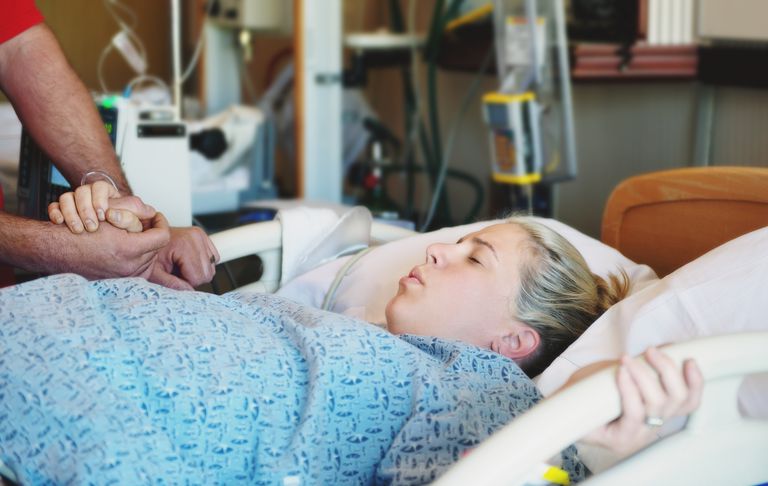
How long it takes for labor to start depends on how ripe your cervix is when your induction starts, the induction techniques used and how your body responds to them. If your cervix needs time to ripen, it might take days before labor begins. If you simply need a little push, you might be holding your baby in your arms in a matter of hours.
After the procedure
In most cases, labor induction leads to a successful vaginal birth. If labor induction fails, you might need to try another induction or have a C-section.
If you have a successful vaginal delivery after induction, there might be no implications for future pregnancies. If the induction leads to a C-section, your health care provider can help you decide whether to attempt a vaginal delivery with a subsequent pregnancy or to schedule a repeat C-section.
The information, including but not limited to, text, graphics, images and other material contained on this website are for informational purposes only. The purpose of this website is to promote broad consumer understanding and knowledge of various health topics. It is not intended to be a substitute for professional medical advice, diagnosis or treatment. Always seek the advice of your physician or another qualified healthcare provider with any questions you may have regarding a medical condition or treatment and before undertaking a new health care regimen, and never disregard professional medical advice or delay in seeking it because of something you have read on this website.
Resources:
https://www.verywellfamily.com/reasons-to-avoid-induction-of-labor-2758959

Labor and Delivery Recovery (Postpartum Recovery)
You’ve finally put 40 (or so) weeks of pregnancy and long hours of childbirth behind you, and you’re officially a mother. Congratulations! Now comes the transition from pregnancy to postpartum, which brings with it a variety of new symptoms and questions.
Your delivery may have been complicated or easy. You may have had a cesarean birth (C-section) or vaginal delivery. You may have labored for a few hours or a few days. No matter what your delivery looked like, your body has been through a trauma just the same. It is going to need time to recover.
How Long Does It Take to Recover After Giving Birth?
Your postpartum recovery won’t be just a few days. Fully recovering from pregnancy and childbirth can take months. While many women feel mostly recovered by 6-8 weeks, it may take longer than this to feel like yourself again. During this time, you may feel as though your body has turned against you. Try not to get frustrated. Remember that your body is not aware of your timelines and expectations. The best thing you can do for it is rest, eat well, and give yourself a break.
If you’ve had a vaginal birth, you’re probably also wondering how long it will take for the soreness to go away and your perineum to heal. Recovery can take anywhere from three weeks if you didn’t tear to six weeks or more if you had a perineal tear or an episiotomy. Wondering if your vagina will ever be the same after birth? Not exactly, though it will likely be very close.
If you delivered by C-Section, expect to spend the first three to four days postpartum in the hospital recovering; it will take four to six weeks before you’re feeling back to normal. Depending on whether you pushed and for how long, you can also expect to have some perineal pain.
Here is more of what you can expect during your postpartum recovery
Abdominal pain. As your uterus shrinks back into its normal size and shape, you will feel pain in your abdomen (lower belly). These pains are called “afterpains.” Most of these pains will be dull, but some will be sharp. You may feel more of these pains as you breastfeed your baby. That is because breastfeeding stimulates a chemical in your body that causes the uterus to contract (tighten). For many women, applying heat to the area helps control the pain. Consider using a heating pad or hot water bottle. Your abdominal pain should ease up over time. If these pains get worse or don’t let up, you should call your doctor.
Baby blues. You are so excited and happy to bring baby home. The next minute, though, you are sad. It can be confusing, especially to new moms. Know that many women (70-80%) struggle with feeling sad the first few weeks after having a baby. It is commonly called the “baby blues” and is caused by hormone changes. It is nothing to be ashamed of. In fact, confiding in a friend of family member can often make you feel better. If these feelings last more than a few weeks or you are not able to function because of them, you could have postpartum depression. Postpartum depression is more serious than baby blues. If you have severe feelings of sadness or hopelessness, you should call your doctor.
Constipation. It is very common to be constipated in the days following childbirth. There are several things that could cause this. If you received any pain-relieving drugs in the hospital, they could slow down your bowels. If you had anesthesia (a pain blocker) for any reason, that also can cause it. Sometimes, postpartum constipation is brought on simply by fear. This is true especially if you have stitches because you had an episiotomy (a surgical cut between the vagina and anus to widen the vaginal opening for childbirth) or tore this area during delivery. You may be afraid of damaging the stitches or be afraid that a bowel movement will cause even more pain in that area. To help ease constipation, drink plenty of water and try to eat foods that offer a lot of fiber. In many cases, you may want to talk to your doctor about prescribing a stool softener (such as Colace or Docusoft). If you haven’t had a bowel movement by four days postpartum, call your doctor.
Hemorrhoids. You may have developed hemorrhoids (painful swelling of a vein in the rectum) during your pregnancy. If not, you may have gotten them from the strain and pushing during delivery. They can cause pain and bleed after a bowel movement. They also itch. You can get some relief from the pain and itching by applying witch hazel to your hemorrhoids. This is especially effective if you keep the witch hazel in the refrigerator. Your hemorrhoids should shrink over time. If not, contact your doctor.
Hormonal shifts. Besides fueling your mood swings (see “Baby blues,” above), hormones are also responsible for other postpartum symptoms. You may be sweating more, especially at night when you sleep. Just make sure that your sweating is not accompanied by a fever. That could be a sign of infection. Hormonal changes also cause hair loss for many new moms. This is only temporary. When your estrogen levels increase, your hair will return to its normal thickness.
Perineum soreness. The perineum is the area between your vagina and anus. Many times, this area will tear during childbirth. Other times, your doctor may have to make a small cut in this area to widen your vagina for childbirth. Even if neither of these things happened during your vaginal birth, you perineum will be sore and possibly swollen postpartum. You may feel discomfort in this area for several weeks. While you recover, sitting on an ice pack several times a day for 10 minutes will help relieve the pain. This is especially good to do after going to the bathroom. During the first week postpartum, also use a squirt bottle to rinse the perineum with warm water after using the toilet. Notify your doctor if your perineum area does not get less sore each day or you have any sign of infection.
Sore nipples and breasts. For achy breasts, try using a warm compress or ice packs and gentle massage. Also be sure to wear a comfortable nursing bra. If you’re breastfeeding, let your breasts air out after every nursing session and apply a lanolin cream to prevent or treat cracked nipples.
Stitches. If you have stitches due to a torn or cut perineum it will take 7-10 days to heal. The stitches will absorb over time. It is important that you keep the stitches from getting infected by gently cleaning them with warm water after each time you use the toilet. Do this by using a squirt bottle to rinse the area and pat it dry. Do not wipe the area with toilet paper or you could irritate the stitched area. No matter how eager you are to check the healing progress, try to keep your hands off the stitches. If the area begins to hurt worse or the stitches seem weepy, contact your doctor. It could be a sign of infection.
If you have stitches from a cesarean birth (C-section), these heal in varying degrees. The stitches in the skin should heal in 5-10 days. The underlying stitches in your muscle layer will take longer to heal. These won’t completely heal for 12 weeks. For the stitches that you can see, make sure to watch for any signs of infection. These signs include if the incision area is red, swollen, or weeping pus; or if you have a fever.
Vaginal bleeding and discharge. After you give birth, postpartum bleeding (this is called lochia) can last for up to six weeks. It will be just like a very heavy period made up of leftover blood, tissue from your uterus and mucus. Bleeding is heaviest for the first three to 10 days, then it will taper off going from red to pink to brown to yellowish-white. If you spot large clots or you’re bleeding through more than one pad every hour, call your doctor right away to rule out postpartum hemorrhage. During this time, tampons are off-limits, so you’ll have to rely on pads.
Water retention. You may be eager for that swelling you noticed during your pregnancy to go away. It won’t, though, for a while longer. Also known as postpartum edema (swelling), your body will continue to hold on to water because of an increase in a hormone called progesterone. You may notice the swelling in your hands, legs, and feet. It shouldn’t last much longer than a week after delivery. If it does or if it seems to get worse over time, be sure to tell your doctor.
Postpartum Recovery Checklist
Here are a few things you’ll want to make your postpartum recovery go as smoothly as possible:
- Acetaminophen. It can help with perineal pain and overall aches.
- Maxi pads. You’ll probably need these for at least a couple of weeks until postpartum bleeding lets up.
- Ice packs. There are lots of ways to ice your perineal area from frozen padsicles to your standard lunchbox ice blocks (wrapped in paper towels, of course, to avoid frostbite).
- Witch hazel pads. This is often used in combination with ice packs to ease vaginal pain and help with hemorrhoids.
- Sitz bath. This little tub is designed for you to just sit and soak away the postpartum pain.
- Peri or squirt bottle. You’ll use this to rinse off your perineal area before/after peeing as the area heals.
- Cotton underpants. Go for the “granny” or hospital gauze underwear, comfort is much more important for now than looking sexy.
- Nursing bras. Invest in a few comfy ones that fit you well.
- Lanolin. The cream works wonders to prevent and treat cracked nipples.
- Nursing pads. If you’re planning to breastfeed, these will help keep leaky nipples under wraps.
- Lidocaine spray. It helps ease the pain of postpartum hemorrhoids.
- Stool softener. In case you get stopped up, this can gently help get things going.
- Postpartum recovery belt. If you think you might want one, the Belly Bandit or other similar belts can help keep things in place as your belly shrinks back to size.
- Heating pad. This can help ease aches and pains in your breasts.
Things to consider
Pay attention to your body after giving birth. If something doesn’t seem right, it probably isn’t.
Just because you’ve made it through delivery, you are not necessarily out of danger for health complications. There are life-threatening problems related to childbirth that can happen days or weeks after delivery.
- Postpartum hemorrhage is rare but can happen. If your postpartum bleeding is filling more than a pad every hour, you should contact your doctor immediately. Without treatment, postpartum hemorrhage can be fatal.
- Headaches that are severe and don’t go away can also signal an underlying problem, especially coupled with high blood pressure. You could be in danger of having a stroke.
- Deep vein thrombosis (a blood clot in a deep vein) is a somewhat uncommon problem (1 in every 1,000 pregnancies) that can occur during or after pregnancy. Symptoms include leg pain or feeling like you have a pulled muscle. Your leg may also be red and hot to the touch. Left untreated, these clots can break away and travel to your lungs. When this happens, it can be life-threatening.
- Postpartum preeclampsia is rare and can develop within 48 hours after childbirth or as late as six weeks after childbirth. It is similar to preeclampsia (also called toxemia), which can occur while you’re pregnant. Both preeclampsia and postpartum preeclampsia cause your blood vessels to constrict (get smaller). This results in high blood pressure and also distresses your internal organs. Sometimes there are no obvious symptoms unless you are monitoring your blood pressure. When you do have symptoms, they may include a severe headache, swelling of your hands and feet, blurred vision, and sudden weight gain. If you suspect you may have postpartum preeclampsia, call your doctor immediately.
When to see a doctor
You’ll usually visit your doctor about 6 weeks after delivery. She’ll check your vagina, cervix, and uterus as well as your weight and blood pressure. Once you’ve gotten the all-clear from her, it’s usually fine to start having sex again (ask your doctor about birth control first) and to get back to an exercise routine.
Before your checkup, call your doctor right away if you have:
- Heavy vaginal bleeding that soaks more than one pad per hour or vaginal bleeding that increases each day instead of decreasing
- Passing large clots (bigger than a quarter)
- Chills and/or a fever of more than 100.4°F
- Fainting or dizziness
- Painful urination or difficulty urinating
- Vaginal discharge with a strong odor
- Heart palpitations, chest pain or difficulty breathing
- Vomiting
- The incision from C-section or episiotomy is red, weepy (with pus), or swollen
- Abdominal (lower belly) pain that is getting worse or new abdominal pain
- Sore breasts that are red or feel hot to the touch
- Pain in your legs with redness or swelling.
The information, including but not limited to, text, graphics, images and other material contained on this website are for informational purposes only. The purpose of this website is to promote broad consumer understanding and knowledge of various health topics. It is not intended to be a substitute for professional medical advice, diagnosis or treatment. Always seek the advice of your physician or another qualified healthcare provider with any questions you may have regarding a medical condition or treatment and before undertaking a new health care regimen, and never disregard professional medical advice or delay in seeking it because of something you have read on this website.
Resources:
https://familydoctor.org/recovering-from-delivery/
https://www.webmd.com/parenting/baby/recovery-vaginal-delivery#3

The ULTIMATE Hospital Bag Checklist
Have everything ready to go when you’re 8 months pregnant, since you could go into labor at any time in the weeks before your due date. You may want to pack two small bags for the hospital or birth center: one for the items you’ll need during labor, and another for items that you won’t need until after you give birth.
Stay sane on delivery day by preparing your hospital bag ahead of time. Here is our complete list of stuff you won’t want to forget.
LABOR BAG
Smartphone and Charger. A camera or video camera with batteries, charger, and memory card. Someone has to document the big event! Some hospitals don’t allow videotaping of the birth itself, but there’s usually no rule against filming during labor or after the birth. If you plan on using your phone to take photos or video, make sure it’s fully charged and pack your charger. Note: Not all hospitals let you use plugs in the delivery room, so you might want to bring a battery-powered charger or another way to charge your devices that doesn’t require a plug.
Important Documents. Bring copies of your birth plan (if you have one), a picture ID, health insurance information, and hospital registration forms. Even if you’ve already registered at the hospital, some hospitals need to confirm your records before they can admit you.
Your birth plan (if you have one) and your insurance information.
Music. Take your iPod, MP3 player or a CD player and some CDs. Some hospitals provide their own CD players and iPod docks so you may ask what they will have available in your room.
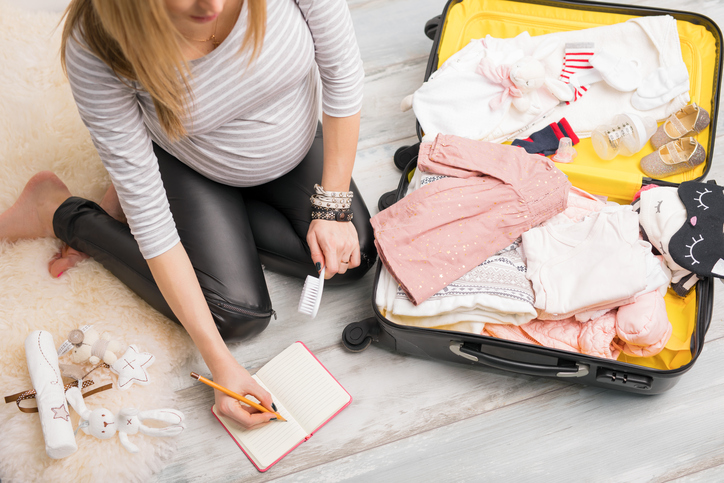
Hair Care Products. If you have long hair, you may want it tied up since it can get in the way during labor. It’s recommended getting the ones that don’t leave a kink in your hair. That way if you want to take pictures with your hair down after the birth, you won’t have a crease in your hair! (Avoid wearing clips in labor. They can poke you!)
Nursing Bra. Bring a nursing tank or bra (buy them at the end of your pregnancy most women are about that same size (postpartum) that’s comfy enough to sleep in.
Sleepwear, Robe, and Underwear. A cotton nightie will be much more comfortable than a hospital gown. A robe will be handy for when you want to walk the hallways. Several pairs of undies are a must (briefs, maternity, or disposables like Depends) if you don’t want to wear the mesh underwear the hospital gives you after
Slippers and/or Heavy Socks. Keep your toes toasty and clean, whether you’re in bed or strolling around on the cold tile floor. Bring a pair that’s easily laundered, as they may get a bit dirty.
Birth Ball. These can really help you during labor. A peanut ball is particularly great for women that are preparing to have an epidural. Highly recommended. Just remember to bring a pump so your birth partner can inflate it for you if you didn’t come with it already inflated.
Lip Balm. Your lips can dry out quickly with all of the deep breathing that you will do in labor. Having some chap stick or lip balm will help.
Snacks and Drinks. First, make sure that your doctor/hospital will allow this. Most of the time they will only allow you to have ice chips when you are at the hospital in labor, but they may have sugar-free Popsicle there for you.
Cash and Change. Bring cash and change for snacks, gift-store runs, and any of your miscellaneous cravings. You not want the hospital food.
Relaxation Tools. A homemade hot pack (a sock filled with rice or beans) can bring you instant relief during active labor because it molds to your body and it can easily be warmed up in the hospital’s microwave. Other items to pack include: back massager, stress-relieving squeeze ball, and massage oil or lotion.
Toiletries. Deodorant, body wash, shampoo, facial cleansing wipes, toothpaste, a toothbrush, and moisturizer are necessities.
Extra clothes for Daddy/Partner. Had some Dad’s/partner’s change their clothes even when their partner is still in labor. They may think the room is too cold so they put on a jacket or a long sleeved shirt or they sweat too much because they’re nervous or working hard too so they need new shirts. Having some extra pairs of clean clothes is good to have on hand.
RECOVERY ROOM BAG 
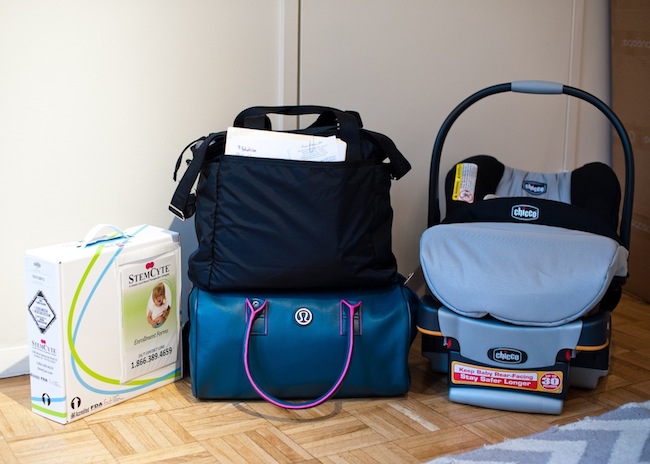
Homecoming Outfit for You. Here’s a hint: You’ll need loose, comfortable clothes to wear while you’re in the hospital and for the journey home. You’ll probably still look about 5 months pregnant, so skip your non-maternity skinny and pack your favorite maternity dress or leggings and a tunic. (Trust us: Not fitting into your going-home outfit is a bummer!)
Toiletries. Pack a few personal items, such as a toothbrush and toothpaste, lip balm, nursing pads (Bring a couple of packs disposable or washable), deodorant, a brush and comb, makeup, and a hairband or barrettes. Hospitals usually provide soap, shampoo, and lotion, but you might prefer your own.
Snacks. After many hours of labor, you’re likely to be pretty hungry, and you may not want to rely solely on hospital food. So bring your own crackers, fresh or dried fruit, nuts, granola bars, or whatever you think you’ll enjoy. A bottle of non alcoholic champagne might be fun for celebrating, too.
Postpartum underwear or disposable underwear. Don’t bring your nice, cute undies with you. You need big, cotton, breathable underwear. Some people even get Silhouette so they can easily toss them after using them. The hospital will have disposable undies, which some women find handy and others find gross since they are large, stretchy, mesh shorts.
Essentials to pack for your Baby 
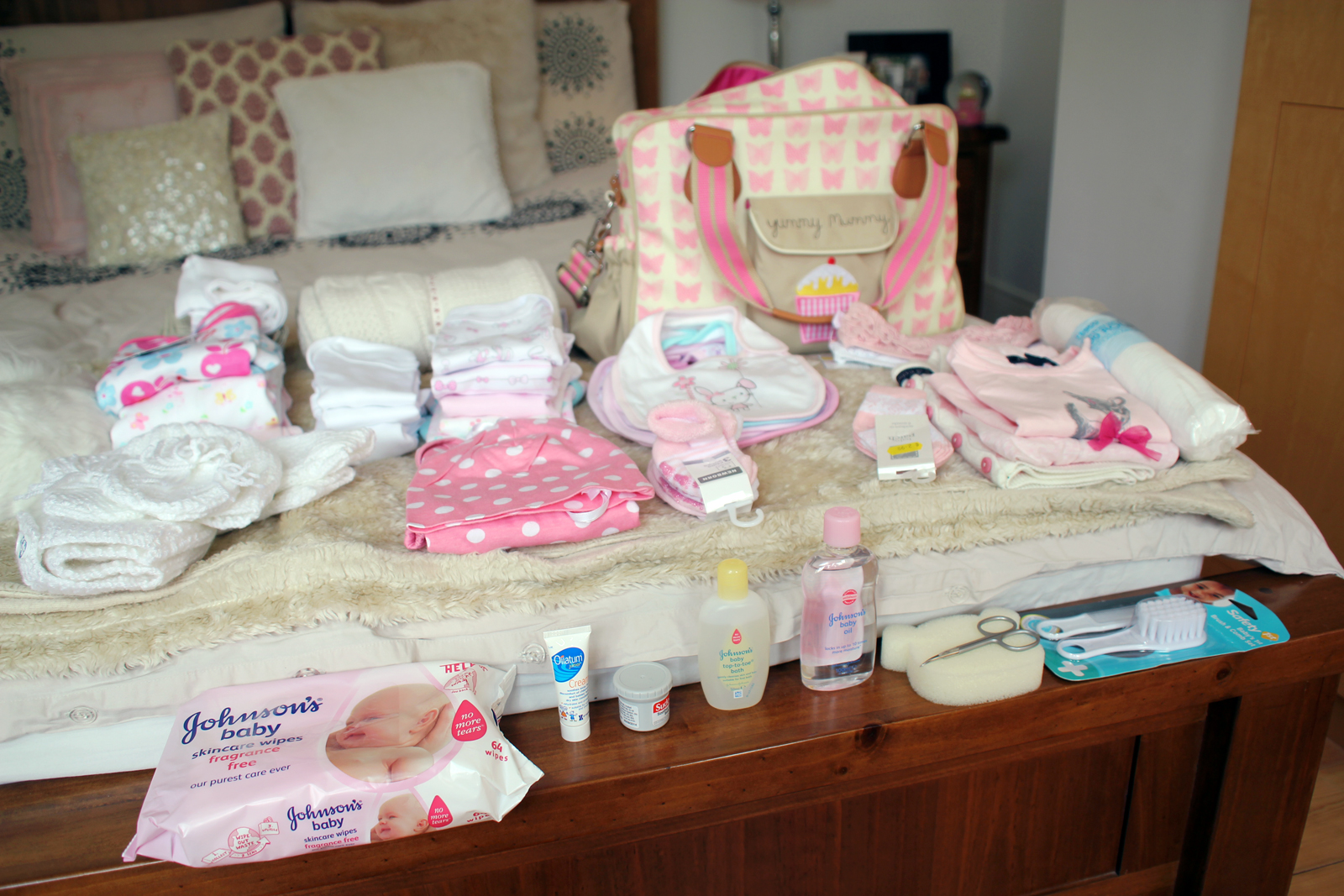
Homecoming Outfit for Baby. Pack a newborn-size kimono-style shirt, with footed pants so you don’t have to bring socks. Make sure your baby’s outfit has legs (is not a baby “gown,” for example) so the car seat strap can fit between them.
Car Seat. You can’t drive your baby home without one! Have a rear-facing car seat properly installed ahead of time and know how to buckle your baby in correctly.
Blankets. The hospital will provide blankets for swaddling your baby while you’re there, but you may want to bring your own to tuck around your baby in the car seat for the ride home. Make it a heavy one if the weather’s cold. You may include: Burp cloths, Onesies, Baby hat/Bow, Nappies and Pacifier