Overnight Oxygen Drops and Sleep Apnea: What SpO2 Trends Can and Cannot Tell You
Overnight Oxygen Drops and Sleep Apnea: What SpO2 Trends Can and Cannot Tell You
Short answer: Overnight oxygen drops can be a useful clue when sleep apnea is suspected, especially when they appear alongside snoring, witnessed breathing pauses, morning headaches, or daytime sleepiness. But oxygen saturation patterns alone cannot diagnose sleep apnea. A clinician usually confirms sleep apnea with a sleep study that measures breathing, oxygen levels, heart rate, sleep stages, and related signals.
Why Overnight Oxygen Drops Matter in Sleep Apnea
Sleep apnea is a sleep-related breathing disorder in which breathing repeatedly stops or becomes shallow during sleep. In obstructive sleep apnea, the upper airway narrows or collapses during sleep. The American Academy of Sleep Medicine describes obstructive sleep apnea as involving repeated breathing disruptions that can cause abrupt reductions in blood oxygen saturation.
For many people, the first visible clue is not the breathing event itself. It is the pattern that follows: oxygen saturation dips, pulse rate changes, sleep disruption, and unrefreshing sleep. This is why overnight SpO2 trends are often discussed by people who suspect sleep apnea or are already using CPAP, oral appliance therapy, or another treatment.
What SpO2 Trends Can Show
SpO2, or peripheral oxygen saturation, estimates how much oxygen your blood is carrying. During healthy sleep, oxygen levels are usually relatively stable. In sleep apnea, oxygen may drop repeatedly when breathing is reduced or paused. SleepApnea.org explains that sleep studies may consider oxygen saturation along with the apnea-hypopnea index, arousals, sleep architecture, and other information when a clinician forms a diagnosis and treatment plan.
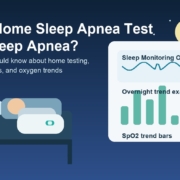
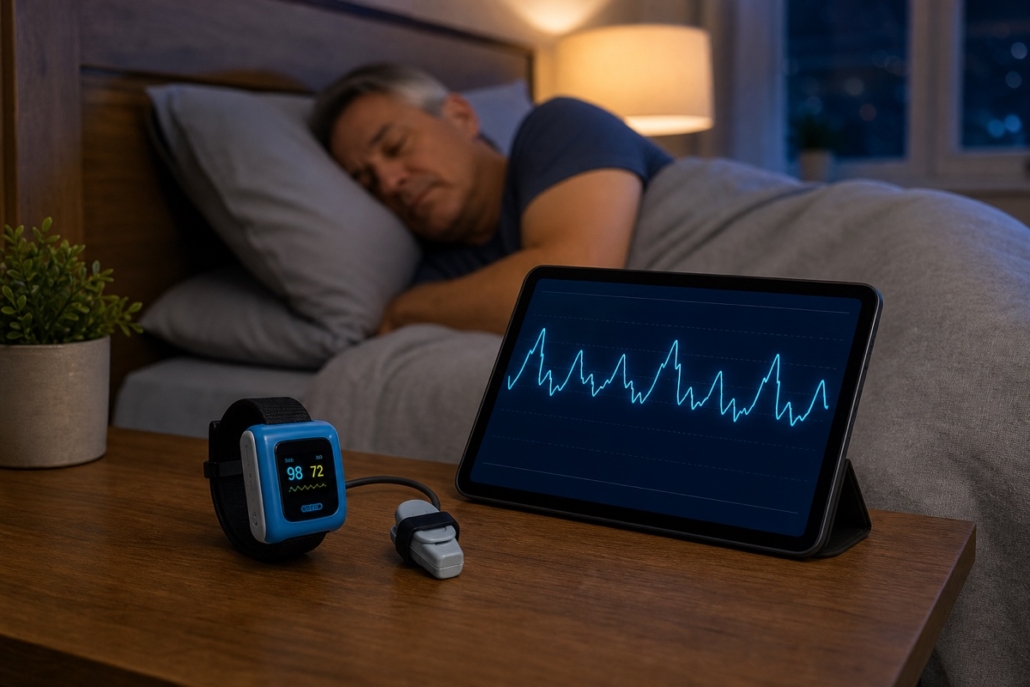
An overnight oximetry report may help show patterns such as repeated oxygen dips, minimum oxygen saturation, average oxygen saturation, pulse-rate changes, and how much time was spent below a threshold. These patterns can help a patient have a more specific conversation with a healthcare provider.
What SpO2 Trends Cannot Show
SpO2 trends are not the same as a sleep apnea diagnosis. Oxygen can drop for reasons other than obstructive sleep apnea, including lung disease, altitude exposure, medication effects, central breathing problems, or other medical conditions. Some people can also have sleep-disordered breathing with sleep fragmentation even when oxygen drops are mild or inconsistent.
The NHLBI notes that sleep apnea diagnosis usually starts with symptoms, risk factors, medical history, and a sleep study. A sleep study can identify the type and severity of sleep apnea by monitoring breathing and oxygen levels along with other measurements. That broader context is why a clinician should interpret oxygen data rather than treating a single number as the whole answer.
How Oximetry Fits Into Screening
A 2025 systematic review and meta-analysis indexed in PubMed concluded that oximetry-based devices may be considered for screening in high-risk individuals, provided that positive results are confirmed by a gold-standard diagnostic method. That is a practical way to think about overnight oxygen monitoring: it can be a useful screening and tracking signal, but it is not a replacement for professional diagnosis.
For people who already have symptoms, an overnight oxygen report may make the next healthcare visit more productive. Instead of saying only “I sleep badly,” a person may be able to discuss repeated oxygen dips, pulse-rate changes, or time spent below a certain oxygen level. Those details may help a clinician decide whether a lab sleep study or home sleep apnea test is appropriate.
When to Ask a Healthcare Provider About Sleep Apnea
Consider speaking with a healthcare provider if overnight oxygen drops appear together with loud snoring, choking or gasping during sleep, witnessed breathing pauses, morning headaches, dry mouth, high blood pressure, trouble concentrating, or daytime sleepiness. SleepApnea.org and NHLBI both emphasize that symptoms, risk factors, and sleep-study data are part of the diagnostic process.
If oxygen levels are very low, symptoms are severe, or there are chest pain, blue lips, severe shortness of breath, confusion, or other urgent symptoms, seek medical care promptly rather than waiting for a routine sleep appointment.
Where the ToronTek-B400 Fits
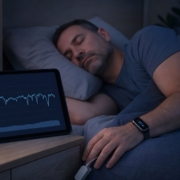
The ToronTek-B400 Sleep Apnea Monitor is a wristband pulse oximeter designed to help users monitor overnight oxygen saturation trends and review software-generated SpO2 reports. In an educational sleep apnea context, that can be helpful for noticing patterns and preparing questions for a healthcare provider.
It is important to use the B400 appropriately: a wristband pulse oximeter can record oxygen and pulse trends, but it does not diagnose sleep apnea, classify the type of sleep apnea, or replace a professional sleep study. Its best role is supporting awareness, tracking, and more informed conversations with a qualified clinician.
Treatment Still Depends on Diagnosis
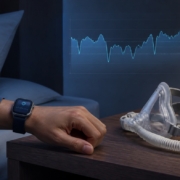
If a sleep study confirms sleep apnea, treatment depends on the type, severity, symptoms, and medical history. NHLBI describes treatment options that may include lifestyle changes, positive airway pressure therapy, oral devices, and other approaches to keep the airway open during sleep. Sleep Foundation notes that CPAP is commonly prescribed for obstructive sleep apnea, while other PAP modes, oral appliances, or surgical options may be considered in specific situations.
The key point is simple: oxygen data can help raise the question, but diagnosis guides treatment. The safest next step after concerning overnight oxygen trends is to bring the report to a healthcare professional.
FAQ
Can overnight oxygen drops diagnose sleep apnea?
No. Overnight oxygen drops can support screening and discussion, but sleep apnea diagnosis usually requires a sleep study interpreted by a healthcare professional.
What is AHI?
AHI stands for apnea-hypopnea index. It estimates how many apnea and hypopnea events occur per hour of sleep or recording time. Oxygen saturation is often considered alongside AHI and other sleep-study findings.
What should I do if my overnight oxygen report looks abnormal?
Save the report and discuss it with a healthcare provider, especially if you also have snoring, witnessed breathing pauses, daytime sleepiness, morning headaches, or cardiovascular risk factors.
Can CPAP improve oxygen drops caused by sleep apnea?
For many people with obstructive sleep apnea, positive airway pressure therapy helps keep the airway open during sleep. Treatment choice should be based on professional diagnosis and follow-up.
Sources Reviewed
- SleepApnea.org: How Is Sleep Apnea Diagnosed? Tests and Screening
- SleepApnea.org: Apnea Hypopnea Index (AHI) for Sleep Apnea
- NHLBI: Sleep Apnea Diagnosis
- NHLBI: Sleep Apnea Treatment
- American Academy of Sleep Medicine: Obstructive Sleep Apnea Fact Sheet
- Sleep Foundation: Sleep Apnea Treatment: CPAP, Oral Appliances, and Surgery
- PubMed: Oximetry-based devices in diagnosis of obstructive sleep apnea: A systematic review and meta-analysis
Disclaimer: This article is for educational and informational purposes only and is not intended as medical advice, diagnosis, or treatment. It should not replace guidance from a qualified healthcare professional. If you have symptoms, a medical condition, or concerns about your health, consult a licensed healthcare provider or seek urgent medical care when appropriate.