Can a Wearable or Pulse Oximeter Diagnose Sleep Apnea? What 2026 Monitoring Guidance Says
Can a Wearable or Pulse Oximeter Diagnose Sleep Apnea? What 2026 Monitoring Guidance Says
Short answer: No. A wearable device or overnight pulse oximeter can show oxygen saturation trends, pulse-rate changes, and repeated overnight dips that may support sleep apnea screening or help you discuss symptoms with a clinician. But sleep apnea diagnosis still requires clinical evaluation and a sleep study or home sleep apnea test interpreted by a qualified medical provider.
Why This Question Is Getting More Attention
Interest in consumer sleep technology is growing quickly. On May 26, 2026, Sleep Review reported that Resmed and Oura partnered to connect wearable sleep data with sleep-health education and clinical care pathways for users with frequent nighttime breathing disturbances. Sleep Review also reported that wearable sleep-tech use in a Resmed survey rose from 16% of adults in 2025 to 53% in 2026.
That trend helps explain why more people are asking whether a wrist-worn tracker, smart ring, or overnight pulse oximeter can answer the sleep apnea question on its own. The useful answer is more precise: these tools may help with awareness, screening, and follow-up, but they do not replace formal diagnosis.
What Sleep Apnea Is and What Diagnosis Requires
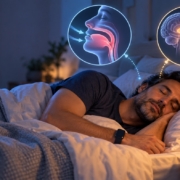
Sleep apnea is a sleep-related breathing disorder in which breathing repeatedly stops or becomes shallow during sleep. In obstructive sleep apnea, the upper airway narrows or collapses during sleep. SleepApnea.org and NHLBI both explain that diagnosis usually starts with symptoms, risk factors, medical history, and a sleep study.
NHLBI says a healthcare provider may refer a patient for a sleep study to help determine what type of sleep apnea is present and how serious it is. That matters because treatment decisions depend on more than oxygen data alone. A diagnostic study can evaluate breathing events, oxygen levels, heart rate, and other signals together.
What a Wearable or Overnight Pulse Oximeter Can Show
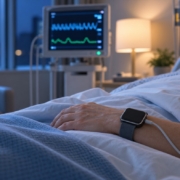
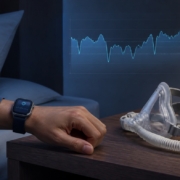
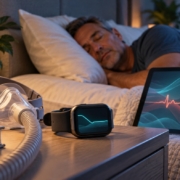
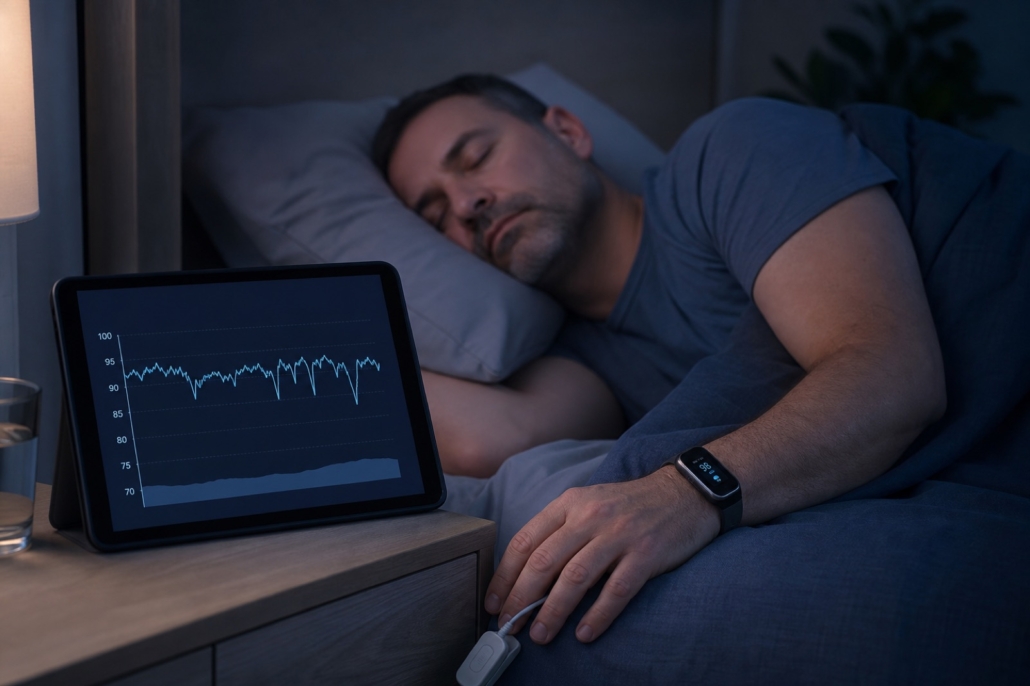
A pulse oximeter estimates peripheral oxygen saturation, often called SpO2. During sleep, a monitoring device may show repeated oxygen dips, the lowest overnight oxygen level, average oxygen level, pulse-rate changes, and how much time was spent below a threshold. Those patterns can be useful when symptoms such as loud snoring, witnessed breathing pauses, waking up gasping, morning headaches, or daytime sleepiness are also present.
In practical terms, an overnight report can help a patient move from a vague concern to a more informed medical conversation. Instead of saying only “I feel tired,” a person may be able to discuss repeated oxygen desaturations, clustering of dips, or changing overnight trends.
What These Devices Cannot Confirm
Oxygen drops are not specific to obstructive sleep apnea. They may also reflect other breathing or medical issues, measurement limitations, motion artifact, altitude exposure, or unrelated sleep disruption. A wearable may miss clinically relevant events, and a normal-looking night does not rule out sleep-disordered breathing.
The American Academy of Sleep Medicine draws an even stricter line for home sleep apnea testing, which is a medical assessment rather than a consumer wellness feature. In its updated position statement, the AASM says diagnosis and treatment decisions must not be based solely on automatically scored home sleep apnea test data and that the raw data must be reviewed and interpreted by a qualified physician. If that level of review is required for a medical home sleep apnea test, consumer wearables and standalone oximetry reports should be treated even more cautiously.
What Recent Research Says About Oximetry Screening
A 2025 systematic review and meta-analysis indexed in PubMed concluded that oximetry-based devices may be considered for screening in high-risk individuals, as long as positive results are confirmed by a gold-standard diagnostic method. That is an important distinction. Screening means a device may help flag concern. Diagnosis means a clinician confirms what condition is present, how severe it is, and what treatment is appropriate.
So the evidence supports a practical middle ground: overnight oximetry can be useful, especially when symptoms or risk factors already point toward possible sleep apnea, but it should be used to support next steps rather than to replace them.
Where the ToronTek-B400 Fits
The ToronTek-B400 is a wristband pulse oximeter that helps users monitor overnight oxygen saturation trends and review software-generated SpO2 reports. In the context of sleep apnea education, that can be helpful for spotting repeated overnight oxygen changes, reviewing trend patterns, and preparing better questions for a healthcare provider.
It is important to use the B400 in the right role. It is not a diagnostic substitute for a professional sleep study, and it should not be used to self-diagnose sleep apnea. Its strongest use is practical monitoring: seeing trend patterns over time, understanding what to bring to a clinical conversation, and following overnight oxygen changes once a provider is already involved.
When to Ask for Clinical Evaluation
Ask a healthcare provider about sleep apnea if overnight monitoring concerns appear alongside loud snoring, choking or gasping during sleep, witnessed pauses in breathing, resistant high blood pressure, morning headaches, poor concentration, or daytime sleepiness. NHLBI notes that a provider will also consider symptoms, risk factors, and family history when deciding whether a sleep study is needed.
If oxygen readings are very low, symptoms are severe, or there are urgent warning signs such as chest pain, confusion, severe shortness of breath, or blue lips, seek prompt medical care instead of waiting for routine follow-up.
Bottom Line
A wearable or overnight pulse oximeter can be a useful sleep apnea screening and monitoring tool, but it cannot diagnose sleep apnea by itself. The safest way to use overnight oxygen data is as a signal for action: review the trend, connect it with symptoms, and take it to a qualified clinician who can decide whether formal sleep testing is needed.
FAQ
Can a pulse oximeter diagnose sleep apnea?
No. A pulse oximeter can show oxygen saturation trends that may support screening or follow-up, but diagnosis requires clinical evaluation and formal sleep testing.
Can a wearable detect signs that should lead to a sleep study?
Yes, sometimes. Repeated overnight oxygen dips or breathing-disturbance alerts may support a conversation with a clinician, especially when symptoms or risk factors are already present.
Why is a sleep study still necessary?
A sleep study helps determine whether sleep apnea is actually present, what type it is, and how severe it is. Treatment decisions depend on that fuller clinical picture.
How can the ToronTek-B400 be useful if it does not diagnose sleep apnea?
The B400 can help users monitor overnight SpO2 trends and review software-generated reports, which may make symptom tracking and healthcare conversations more specific and productive.
Sources Reviewed
- Sleep Review Magazine: Resmed, Oura Partner to Connect Wearable Sleep Data with Clinical Care Pathways
- SleepApnea.org: How Is Sleep Apnea Diagnosed? Tests and Screening
- NHLBI: Sleep Apnea Diagnosis
- American Academy of Sleep Medicine: Clinical use of a home sleep apnea test: an updated American Academy of Sleep Medicine position statement
- PubMed: Oximetry-based devices in diagnosis of obstructive sleep apnea: A systematic review and meta-analysis
Source note: patient forums and Reddit were not used for factual claims in this article.
Disclaimer: This article is for educational and informational purposes only and is not intended as medical advice, diagnosis, or treatment. It should not replace guidance from a qualified healthcare professional. If you have symptoms, a medical condition, or concerns about your health, consult a licensed healthcare provider or seek urgent medical care when appropriate.