Wearable Breathing Alerts and Sleep Apnea: When Should They Lead to a Home Sleep Test?
Wearable Breathing Alerts and Sleep Apnea: When Should They Lead to a Home Sleep Test?
Short answer: If a wearable keeps flagging nighttime breathing disturbances, oxygen dips, loud snoring patterns, or unexplained poor sleep alongside symptoms like daytime sleepiness or morning headaches, that should usually lead to a conversation with a clinician about formal sleep apnea testing. Wearable alerts can support screening, but they do not diagnose sleep apnea on their own.
Why This Question Matters More in 2026
On May 26, 2026, Sleep Review reported that Resmed and Oura partnered to connect wearable sleep data with clinical care pathways. The article said Oura users with frequent nighttime breathing disturbances may be directed to Resmed educational and clinical resources, and it also cited a Resmed survey showing wearable sleep-technology use rising from 16% of adults in 2025 to 53% in 2026.
That shift reflects a practical reality: more people now arrive at a sleep-apnea question because a device flagged something first. The useful next question is not whether a wearable can replace medical testing. It is when the data should push someone toward a proper home sleep apnea test or in-lab sleep study.
What Wearable Breathing Alerts Usually Mean
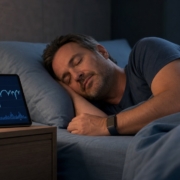
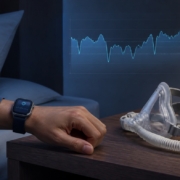
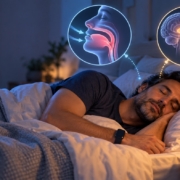
Wearables and overnight oxygen monitors may flag repeated oxygen desaturations, nighttime breathing disturbances, pulse-rate changes, or sleep fragmentation patterns. These signals can suggest that something important is happening during sleep, especially when they recur over multiple nights.
However, those alerts are not the same as a diagnosis. Sleep apnea diagnosis depends on clinical context, symptom review, and formal measurement of breathing events during sleep. SleepApnea.org explains that diagnosis usually begins with symptoms, medical history, and risk factors, then is confirmed with a sleep study that measures breathing patterns and calculates the apnea-hypopnea index, or AHI.
When an Alert Should Lead to Medical Evaluation
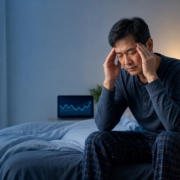
A wearable alert is more meaningful when it appears together with classic sleep apnea symptoms or risk factors. Both NHLBI and SleepApnea.org describe common warning signs such as loud snoring, gasping or choking during sleep, witnessed breathing pauses, morning headaches, poor concentration, and excessive daytime sleepiness.
You should be more likely to seek formal evaluation when:
- breathing or oxygen alerts repeat over several nights rather than appearing once,
- someone has noticed loud snoring, gasping, or pauses in breathing,
- you feel sleepy, foggy, or unrested during the day,
- you already have risk factors such as obesity, high blood pressure, or family history, or
- the device trend appears to be getting worse over time.
NHLBI says a healthcare provider may refer a patient for a sleep study to determine which type of sleep apnea is present and how serious it is. That step matters because treatment decisions depend on the full pattern, not only on oxygen changes.
What a Home Sleep Apnea Test Is and Is Not
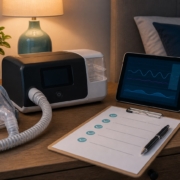
A home sleep apnea test, often called an HSAT, is not the same thing as a general consumer wellness alert. The American Academy of Sleep Medicine says an HSAT is a medical assessment used to diagnose obstructive sleep apnea or evaluate treatment efficacy in appropriate adults. The AASM also says the need for an HSAT should be based on medical history and a clinical evaluation by a medical provider.
That distinction is important for people comparing medical testing with wearables. A home sleep apnea test is still part of clinical care. It is ordered, reviewed, and interpreted in a medical context.
Why a Wearable Still Cannot Make the Diagnosis
The AASM position statement is clear that diagnosis and treatment decisions must not be based only on automatically scored HSAT data, and that the raw data must be reviewed by a qualified physician. If that level of review is required even for a medical home sleep apnea test, then consumer wearables should be treated as screening or awareness tools rather than diagnostic tools.
Some people may also have poor sleep, low oxygen readings, or fragmented sleep for reasons other than obstructive sleep apnea. A device can point toward concern, but it cannot establish the cause by itself.
What the 2025 Research Says About Oximetry-Based Devices
A 2025 systematic review and meta-analysis indexed in PubMed evaluated oximetry-based devices against polysomnography, the gold-standard sleep test. The review found high sensitivity but lower specificity. In practical terms, that means these devices may be useful for screening in high-risk adults, but positive results still need confirmation through a gold-standard diagnostic method.
That finding supports a balanced interpretation. Wearable or oximetry-based alerts should not be ignored, especially in high-risk people. But they should also not be treated as a final answer.
Where the ToronTek-B400 Fits
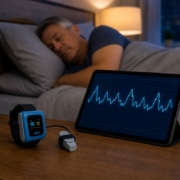
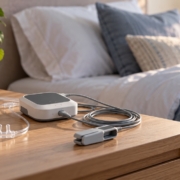
The ToronTek-B400 is a wristband pulse oximeter and sleep apnea monitor that can help users track overnight oxygen saturation trends and review software-generated SpO2 reports. That makes it useful for practical monitoring, pattern review, and bringing clearer information into a clinical discussion.
Used appropriately, the B400 can help a user notice repeated overnight oxygen changes, compare trends across nights, and decide when the pattern deserves medical follow-up. It is not a substitute for a professional sleep study, and it should not be used to self-diagnose sleep apnea.
How to Use Wearable Data More Effectively
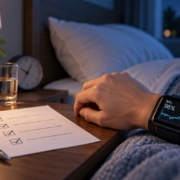
If your wearable or overnight monitor keeps raising concerns, the most useful next step is not guessing. It is organizing the information for clinical review. Keep notes on symptoms, how often the alerts happen, whether someone notices snoring or breathing pauses, and whether the pattern changes with body position, alcohol intake, illness, or weight changes.
That kind of pattern tracking can help a clinician decide whether a home sleep apnea test is appropriate or whether an in-lab sleep study would be a better fit.
Bottom Line
Wearable breathing alerts should be treated as a reason to ask a better medical question, not as a diagnosis. When repeated alerts line up with symptoms or risk factors, they can be a strong prompt to seek formal sleep apnea testing. The safest path is to use wearable data for awareness and monitoring, then move to clinician-guided sleep testing when the pattern suggests real concern.
FAQ
Can a wearable breathing alert diagnose sleep apnea?
No. It can highlight a possible problem, but diagnosis still requires clinical evaluation and formal sleep testing.
When should I ask for a home sleep apnea test?
Ask when breathing alerts or oxygen dips happen repeatedly and you also have symptoms such as loud snoring, daytime sleepiness, morning headaches, or witnessed breathing pauses.
What is the difference between a wearable alert and an HSAT?
A wearable alert is a consumer-facing signal. An HSAT is a medical assessment ordered and interpreted within clinical care to help diagnose obstructive sleep apnea in appropriate patients.
How can the ToronTek-B400 help without diagnosing sleep apnea?
The B400 can help users monitor overnight SpO2 trends and review software-generated reports, which may make symptom tracking and clinician conversations more specific and useful.
Sources Reviewed
- Sleep Review Magazine: Resmed, Oura Partner to Connect Wearable Sleep Data with Clinical Care Pathways
- SleepApnea.org: How Is Sleep Apnea Diagnosed?
- NHLBI: Sleep Apnea: What Is Sleep Apnea?
- NHLBI: Sleep Apnea Diagnosis
- American Academy of Sleep Medicine: Clinical use of a home sleep apnea test: an updated American Academy of Sleep Medicine position statement
- PubMed: Oximetry-based devices in diagnosis of obstructive sleep apnea: A systematic review and meta-analysis
Source note: patient forums and Reddit were not used for factual claims in this article.
Disclaimer: This article is for educational and informational purposes only and is not intended as medical advice, diagnosis, or treatment. It should not replace guidance from a qualified healthcare professional. If you have symptoms, a medical condition, or concerns about your health, consult a licensed healthcare provider or seek urgent medical care when appropriate.