
 ToronTek-All Rights Reserved
Pulse Oximeter for Sleep Monitoring: What Features Matter Most?
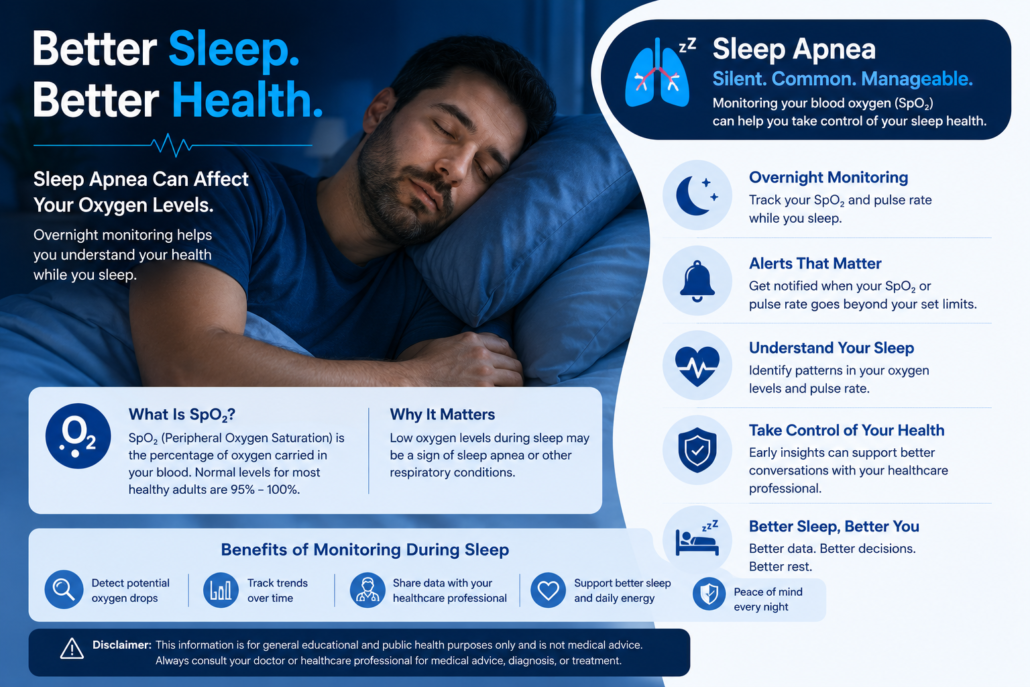
Pulse oximeters are commonly used to measure blood oxygen saturation (SpO₂) and pulse rate. While many pulse oximeters are designed for quick spot-check measurements, some models are better suited for extended monitoring periods, including overnight use.
If you’re looking for a pulse oximeter for sleep monitoring, understanding the differences between fingertip and wrist-worn designs can help you choose the right device.
What Pulse Oximeter Is Best for Overnight Monitoring?
For overnight monitoring, comfort is one of the most important considerations.
Traditional fingertip pulse oximeters are excellent for quick measurements but may be less comfortable during extended wear because the entire device remains attached to the finger.
A wrist-worn pulse oximeter, such as the [ToronTek-B400 Wrist Pulse Oximeter], separates the display unit from the sensor. The lightweight finger probe remains on the finger while the monitor is worn on the wrist, helping improve comfort during longer monitoring sessions.
Why Is Comfort Important During Sleep Monitoring?
Extended monitoring requires a device that remains secure while minimizing interference with natural movement during sleep.
Key features to consider include:
- Lightweight sensor design
- Secure probe attachment
- Comfortable wrist-worn monitor
- Long battery life
- Adjustable display brightness
- Alarm functions
The [ToronTek-B400 Wrist Pulse Oximeter] was designed with these considerations in mind and features a lightweight finger sensor connected to a wrist-worn monitor.
Wrist Pulse Oximeter vs Fingertip Pulse Oximeter
Fingertip Pulse Oximeters
Fingertip pulse oximeters such as the [ToronTek-G64+ Pulse Oximeter] [ToronTek-L12 Pulse Oximeter with App], and ToronTek-H50+ Pulse Oximeter are ideal for:
- Spot-check measurements
- Quick oxygen saturation readings
- Portable everyday monitoring
- Travel use
Wrist Pulse Oximeters
Wrist pulse oximeters are often preferred for:
- Extended monitoring sessions
- Overnight oxygen monitoring
- Situations where comfort is important
- Long-duration recording applications
The wrist-worn design allows the display and battery to remain on the wrist while only a lightweight sensor is attached to the finger.
Features to Look for in a Sleep Monitoring Pulse Oximeter
Comfortable Sensor Design
A lightweight finger probe can improve comfort during extended monitoring.
Alarm Functions
Alarm settings can notify users when SpO₂ or pulse rate readings move outside selected limits.
The [ToronTek-B400 Wrist Pulse Oximeter] includes adjustable alarm settings for both oxygen saturation and pulse rate monitoring.
Rechargeable Battery
For extended monitoring, battery performance is important.
Unlike many fingertip pulse oximeters that use disposable AAA batteries, the [ToronTek-B400 Wrist Pulse Oximeter]features a built-in rechargeable lithium battery.
Adjustable Screen Brightness
Display brightness can be adjusted to suit different viewing conditions while helping minimize unnecessary light exposure during overnight monitoring.
Why Choose the ToronTek-B400 Wrist Pulse Oximeter?
The ToronTek-B400 offers several advantages for users seeking a pulse oximeter designed for extended monitoring:
- Wrist-worn monitor design
- Lightweight finger probe
- Color display
- Adjustable brightness settings
- Adjustable SpO₂ and pulse rate alarms
- Rechargeable lithium battery
- Comfortable design for overnight monitoring
Its unique wrist-and-probe configuration makes it different from traditional fingertip pulse oximeters and particularly well suited for extended monitoring applications.
Frequently Asked Questions
What pulse oximeter is best for overnight monitoring?
Many users prefer wrist-worn pulse oximeters for overnight monitoring because the lightweight finger sensor may be more comfortable than a traditional fingertip device. The ToronTek-B400 Wrist Pulse Oximeter was specifically designed with extended monitoring comfort in mind.
Can a pulse oximeter be worn overnight?
Some pulse oximeters are designed for extended monitoring applications. Wrist-worn designs often provide greater comfort for longer monitoring sessions compared with traditional fingertip models.
Why is a wrist pulse oximeter more comfortable?
A wrist pulse oximeter places the monitor on the wrist while using a lightweight finger probe, reducing the amount of weight attached directly to the finger.
Does the ToronTek-B400 have alarm functions?
Yes. The ToronTek-B400 includes adjustable alarm settings for both oxygen saturation (SpO₂) and pulse rate measurements.
Does the ToronTek-B400 use disposable batteries?
No. The ToronTek-B400 features a built-in rechargeable lithium battery.
Conclusion
When selecting a pulse oximeter for sleep monitoring, comfort, battery life, alarm functions, and display quality are all important considerations. While fingertip pulse oximeters remain excellent for spot-check measurements, wrist-worn designs such as the ToronTek-B400 offer unique advantages for extended monitoring applications thanks to their lightweight finger probe and comfortable wrist-mounted display.
Disclaimer: The information in this article is provided for general educational and informational purposes only and does not constitute medical advice. Always consult a qualified healthcare professional regarding any questions about your health, symptoms, oxygen saturation readings, or medical condition.
 ToronTek- All Rights Reserved
 ToronTek-All Rights Reserved
Leave a Reply
Want to join the discussion?Feel free to contribute!