
 ToronTek- All Rights Reserved
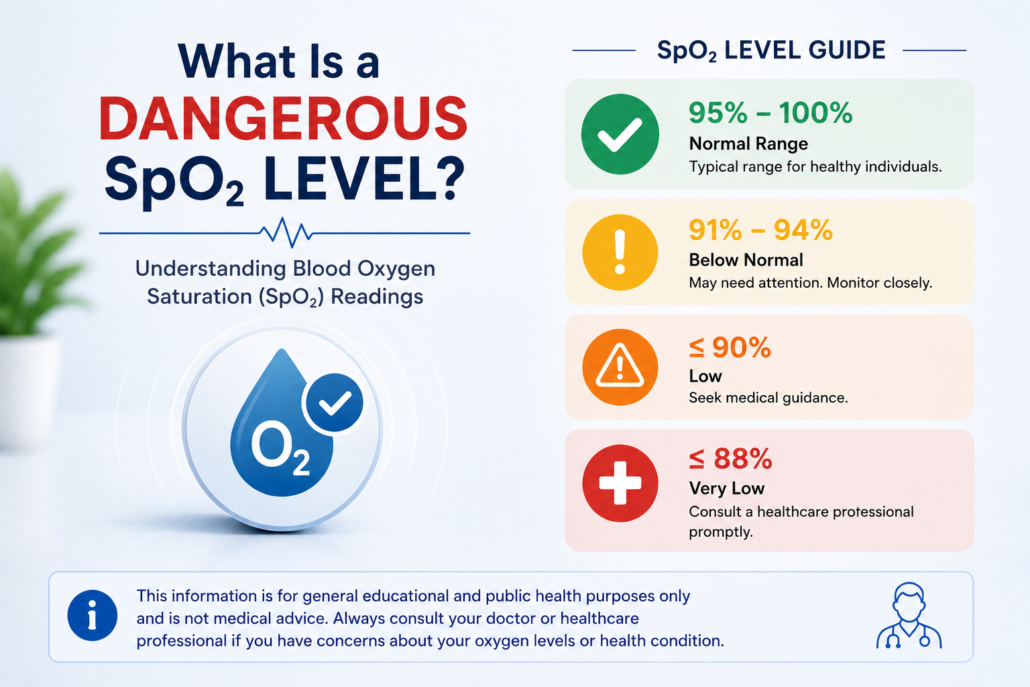
What Is a Dangerous Blood Oxygen Level? Understanding SpO2 Readings?
Blood oxygen saturation (SpO2) is a measurement that estimates the percentage of oxygen being carried by red blood cells. Pulse oximeters are commonly used to measure SpO2 quickly and non-invasively.
Many people wonder what constitutes a dangerous blood oxygen level and how to interpret pulse oximeter readings. Understanding oxygen saturation ranges can help individuals better understand the information displayed by their oxygen saturation monitor.
What Is SpO2?
SpO2 stands for peripheral capillary oxygen saturation. It is expressed as a percentage and represents an estimate of how much oxygen is being carried in the bloodstream.
Pulse oximeters measure SpO2 using optical sensors placed on the fingertip or other approved sensor locations.
Examples of pulse oximeters include:
- [ToronTek-L12 Pulse Oximeter with App]
- [ToronTek-G64+ Pulse Oximeter]
- [ToronTek-B400 Wrist Pulse Oximeter]
What Is Considered a Normal Blood Oxygen Level?
SpO2 values can vary between individuals and may be influenced by age, altitude, health status, activity level, and other factors.
Generally, healthy individuals often display oxygen saturation readings in the mid-to-high 90% range. However, interpretation of oxygen saturation values should always take individual circumstances into account.
What Is Considered a Low Blood Oxygen Level?
Lower oxygen saturation readings may warrant attention depending on the individual’s health status, symptoms, and medical history.
A single reading should not be interpreted in isolation. Repeated measurements, overall trends, and clinical context are important considerations.
What Is a Dangerous Blood Oxygen Level?
There is no single oxygen saturation value that applies to every person or situation. The significance of a reading depends on many factors, including medical history, symptoms, physician guidance, and individual health conditions.
If an individual has concerns regarding oxygen saturation readings or experiences symptoms that may be related to oxygen levels, they should seek guidance from a qualified healthcare professional.
Factors That Can Affect Pulse Oximeter Readings
Several factors can influence SpO2 measurements:
- Finger movement
- Cold hands or reduced circulation
- Nail polish or artificial nails
- Ambient lighting conditions
- Improper sensor placement
- Device quality
For best results:
- Remain still during measurement
- Ensure proper finger placement
- Allow the reading to stabilize
- Follow the manufacturer’s instructions
Choosing a Pulse Oximeter for Oxygen Monitoring
When selecting a pulse oximeter, users may wish to consider:
Smartphone Connectivity
The [ToronTek-L12 Pulse Oximeter with App] offers Bluetooth connectivity and smartphone tracking.
Alarm Functions
The [ToronTek-G64+ Pulse Oximeter], [ToronTek-L12 Pulse Oximeter with App], and [ToronTek-B400 Wrist Pulse Oximeter] include alarm capabilities that can alert users when readings move beyond selected limits.
Extended Monitoring
The [ToronTek-B400 Wrist Pulse Oximeter] is designed for comfortable extended monitoring using a wrist-worn monitor and lightweight finger sensor.
Important Disclaimer
The information provided in this article is for general educational and public health information purposes only and should not be considered medical advice, diagnosis, or treatment. Oxygen saturation readings should always be interpreted in the context of an individual’s overall health, symptoms, and medical history. If you have concerns about your oxygen saturation levels or health condition, consult a qualified healthcare professional or physician.
Frequently Asked Questions
What is a dangerous blood oxygen level?
The significance of a blood oxygen reading depends on the individual, their symptoms, health status, and guidance from healthcare professionals. Oxygen saturation values should not be interpreted without considering the broader clinical context.
What does SpO2 mean?
SpO2 stands for peripheral capillary oxygen saturation and represents an estimate of the percentage of oxygen carried by red blood cells.
Can pulse oximeter readings vary?
Yes. Factors such as movement, circulation, finger placement, nail polish, and environmental conditions may affect readings.
Which ToronTek pulse oximeter includes smartphone connectivity?
The [ToronTek-L12 Pulse Oximeter with App] features Bluetooth connectivity and smartphone-based data tracking.
Which ToronTek pulse oximeter is designed for overnight monitoring?
The [ToronTek-B400 Wrist Pulse Oximeter] features a wrist-worn design with a lightweight finger sensor for extended monitoring applications.
Conclusion
Pulse oximeters provide a convenient way to measure blood oxygen saturation and pulse rate. Understanding SpO2 readings, factors that affect measurements, and proper measurement techniques can help users obtain more reliable information from their oxygen saturation monitor.
 ToronTek- All Rights Reserved
 ToronTek-All Rights Reserved
Leave a Reply
Want to join the discussion?Feel free to contribute!