
 ToronTek- All Rights Reserved
How Accurate Are Pulse Oximeters? Understanding SpO2 Measurement Accuracy
How accurate is Pulse Oximeter?
Pulse oximeters are widely used to measure blood oxygen saturation (SpO2) and pulse rate. As these devices have become more common, many people ask an important question: How accurate is a pulse oximeter?
Understanding how pulse oximeters work, what factors can influence readings, and how to obtain the most reliable measurements can help users better interpret their results.
How Does a Pulse Oximeter Work?
A pulse oximeter uses light sensors to estimate the percentage of oxygen carried in the blood. The device shines specific wavelengths of light through the fingertip and analyzes how much light is absorbed by oxygenated and deoxygenated blood.
The result is displayed as:
- SpO2 (blood oxygen saturation)
- Pulse Rate (heart rate)
- Additional measurements on some models, such as Perfusion Index (PI)
Examples of pulse oximeters include:
- [ToronTek-L12 Pulse Oximeter with App]
- [ToronTek-G64+ Pulse Oximeter]
- [ToronTek-B400 Wrist Pulse Oximeter]
How Accurate Is a Pulse Oximeter?
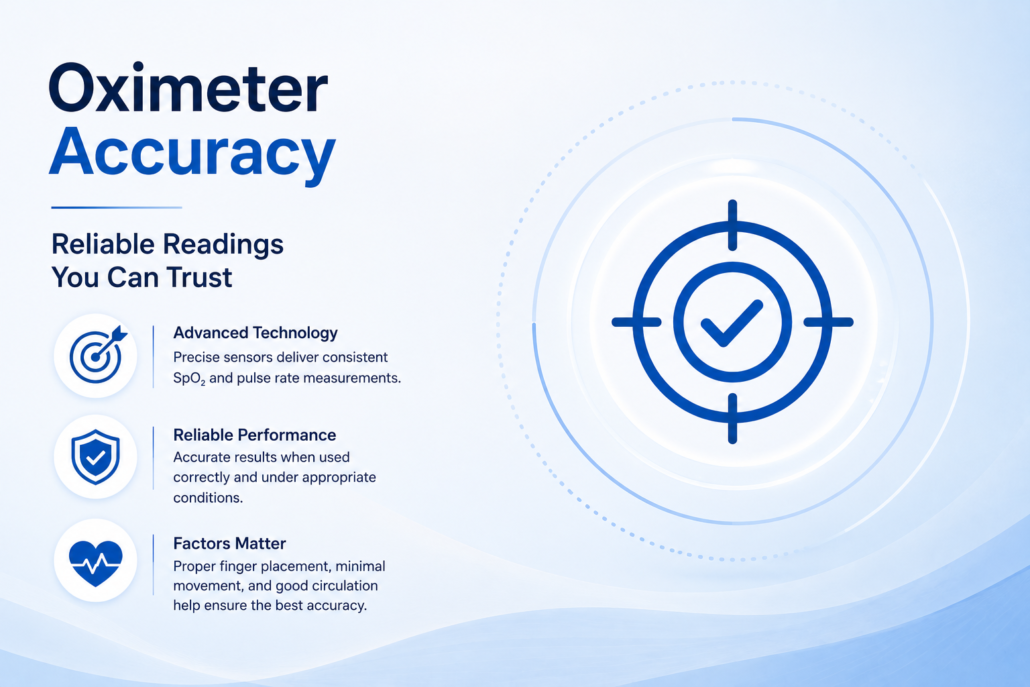
Pulse oximeters are designed to provide an estimate of blood oxygen saturation. When used according to manufacturer instructions and under appropriate conditions, modern pulse oximeters can provide highly consistent SpO2 and pulse rate readings.
Accuracy can vary depending on:
- Proper finger placement
- Hand movement during measurement
- Blood circulation
- Ambient lighting conditions
- Nail polish or artificial nails
- Sensor quality
- Device design
For best results, measurements should be taken while remaining still and allowing the device sufficient time to stabilize.
What Factors Can Affect Pulse Oximeter Accuracy?
Movement
Excessive hand or finger movement can interfere with measurement quality.
Poor Circulation
Cold hands or reduced blood flow may make it more difficult for the sensor to obtain a stable reading.
Nail Polish and Artificial Nails
Dark nail polish or artificial nails can sometimes affect the amount of light reaching the sensor.
Improper Fit
The finger should be positioned properly within the pulse oximeter to ensure accurate sensor alignment.
Are Fingertip Pulse Oximeters Accurate?
Fingertip pulse oximeters remain one of the most popular oxygen monitoring solutions because they are simple, portable, and easy to use.
Models such as the [ToronTek-G64+ Pulse Oximeter] and [ToronTek-L12 Pulse Oximeter with App] are designed for quick spot-check monitoring and feature bright displays for easy viewing.
Are Wrist Pulse Oximeters Accurate?
Wrist pulse oximeters use a different design that separates the finger sensor from the display unit.
The [ToronTek-B400 Wrist Pulse Oximeter] uses a lightweight finger probe connected to a wrist-worn monitor. This design can be particularly useful for extended monitoring applications where comfort is important.
How Can You Improve Measurement Quality?
To obtain the most reliable readings:
- Sit comfortably and remain still
- Warm cold hands before measurement
- Remove dark nail polish if possible
- Ensure proper finger placement
- Allow the reading to stabilize
- Follow the device instructions carefully
Choosing a Quality Pulse Oximeter
When selecting a pulse oximeter, consider features such as:
Display Quality
The [ToronTek-G64+ Pulse Oximeter] features a color OLED display with rotating viewing modes.
Smartphone Connectivity
The [ToronTek-L12 Pulse Oximeter with App] offers Bluetooth connectivity and smartphone data tracking.
Extended Monitoring
The [ToronTek-B400 Wrist Pulse Oximeter] is designed for comfortable extended monitoring using a wrist-worn monitor and finger sensor.
Large Display
The [ToronTek-H50+ Pulse Oximeter] features a large digital display with oversized numbers for easy viewing.
Frequently Asked Questions
How accurate is a pulse oximeter?
Pulse oximeters are designed to estimate blood oxygen saturation and pulse rate using optical sensor technology. Reading quality can be influenced by movement, circulation, finger placement, and environmental factors.
Can finger movement affect pulse oximeter readings?
Yes. Excessive movement during measurement may interfere with the sensor’s ability to obtain a stable reading.
Why are my pulse oximeter readings different at different times?
Factors such as activity level, circulation, body position, and measurement conditions may contribute to normal variations in readings.
Does nail polish affect pulse oximeter accuracy?
Certain dark-colored nail polishes and artificial nails may affect sensor performance by altering light transmission.
Which ToronTek pulse oximeter includes Bluetooth connectivity?
The [ToronTek-L12 Pulse Oximeter with App] features Bluetooth connectivity and smartphone tracking capabilities.
Related ToronTek Pulse Oximeters
- [ToronTek-L12 Pulse Oximeter with App]
- [ToronTek-G64+ Pulse Oximeter]
- [ToronTek-B400 Wrist Pulse Oximeter]
Conclusion
Pulse oximeters are valuable tools for measuring blood oxygen saturation and pulse rate. Understanding the factors that influence measurement quality can help users obtain more consistent readings and select the pulse oximeter that best meets their monitoring needs.
 ToronTek- All Rights Reserved
 ToronTek- All Rights Reserved
Leave a Reply
Want to join the discussion?Feel free to contribute!