
 ToronTek- All Rights Reserved
Pulse Oximeter vs Smartwatch Oxygen Monitoring: Which Is More Accurate?
Smartwatches and pulse oximeters can both measure blood oxygen saturation (SpO2), but they are designed for different purposes. As wearable technology becomes more advanced, many people wonder whether a smartwatch can replace a dedicated pulse oximeter.
Understanding the differences between these devices can help users select the most appropriate oxygen saturation monitor for their needs.
What Is a Pulse Oximeter?
A pulse oximeter is a device specifically designed to measure blood oxygen saturation (SpO2) and pulse rate. Most pulse oximeters use sensors that pass light through the fingertip to calculate oxygen saturation levels and heart rate.
Dedicated pulse oximeters are designed specifically for oxygen monitoring and often provide additional features such as alarm functions, perfusion index measurements, and specialized display modes.
Examples include:
- [ToronTek-L12 Pulse Oximeter with App]
- [ToronTek-G64+ Pulse Oximeter]
- [ToronTek-B400 Wrist Pulse Oximeter]
- [ToronTek-H50+ Pulse Oximeter]
What Is Smartwatch Oxygen Monitoring?
Many modern smartwatches include blood oxygen monitoring features. These devices use optical sensors located on the underside of the watch to estimate blood oxygen saturation through the wrist.
Smartwatch blood oxygen monitoring can be useful for general wellness tracking and trend observation. However, oxygen monitoring is typically one of many features included alongside fitness tracking, messaging, notifications, sleep tracking, and other functions.
Is a Pulse Oximeter More Accurate Than a Smartwatch?
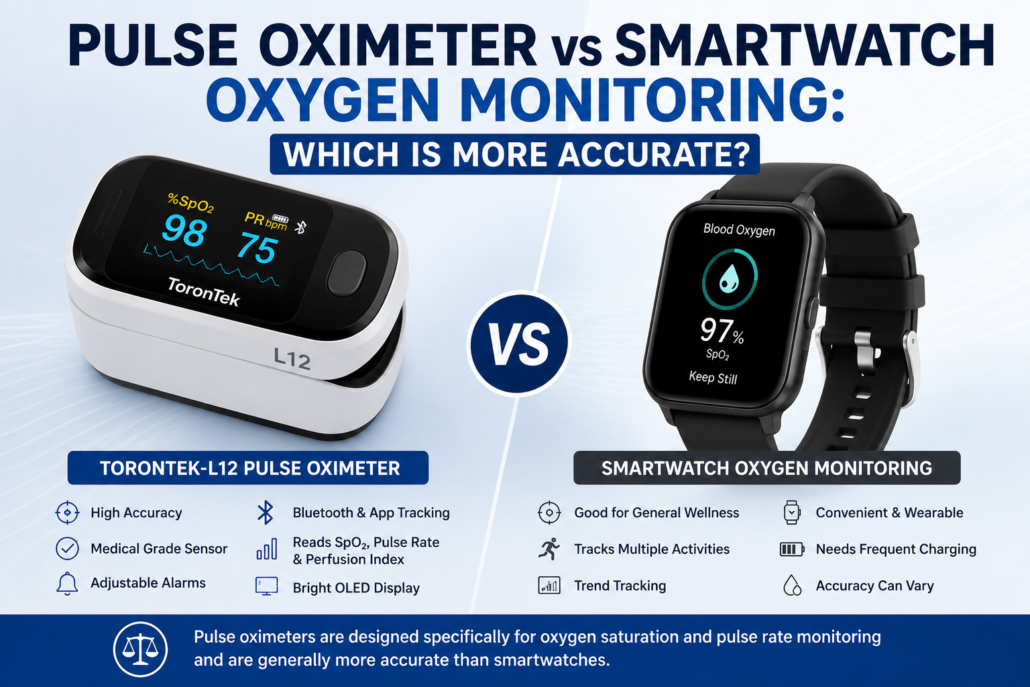
In general, dedicated pulse oximeters are designed specifically for measuring SpO2 and pulse rate, while smartwatches perform oxygen monitoring as one feature among many.
Several factors can affect smartwatch readings, including:
- Wrist movement
- Skin contact
- Watch fit
- Sensor placement
- Ambient light interference
Pulse oximeters are designed to position sensors directly on the fingertip, which can help provide consistent measurement conditions.
For individuals seeking a dedicated oxygen saturation monitor, a pulse oximeter is often the preferred option because its primary purpose is SpO2 and pulse rate measurement.
When Is a Pulse Oximeter the Better Choice?
A dedicated pulse oximeter may be the preferred option when users need:
- Fast spot-check measurements
- Audible alarm functions
- High and low SpO2 alerts
- Pulse rate monitoring
- Perfusion index measurements
- Clear standalone display screens
The [ToronTek-G64+ Pulse Oximeter] includes adjustable alarms, a color OLED display, and multiple viewing modes.
The [ToronTek-L12 Pulse Oximeter with App] combines Bluetooth connectivity with smartphone tracking capabilities.
For extended monitoring applications, the [ToronTek-B400 Wrist Pulse Oximeter] features a lightweight finger sensor connected to a wrist-worn monitor.
Users seeking large, easy-to-read numbers may prefer the [ToronTek-H50+ Pulse Oximeter].
When Is a Smartwatch the Better Choice?
A smartwatch may be suitable for individuals who want:
- General wellness tracking
- Fitness monitoring
- Daily activity tracking
- Convenient wearable technology
- Multiple health metrics in a single device
Many users appreciate having oxygen saturation information available alongside heart rate, exercise, and sleep-related metrics.
Key Differences Between Pulse Oximeters and Smartwatches
| Feature | Pulse Oximeter | Smartwatch |
|---|---|---|
| Primary Purpose | SpO2 & Pulse Monitoring | Multi-function wearable |
| Sensor Location | Fingertip | Wrist |
| Alarm Features | Often Available | Not Always Available |
| Dedicated Oxygen Monitoring | Yes | Secondary Feature |
| Bluetooth Tracking | Available on Select Models | Often Available |
| Overnight Monitoring Options | Available on Select Models | Varies by Device |
Choosing the Right Oxygen Saturation Monitor
The best choice depends on how the device will be used.
Individuals seeking dedicated oxygen saturation monitoring often prefer pulse oximeters because they are specifically designed for measuring SpO2 and pulse rate.
Those who primarily want fitness and lifestyle tracking may prefer the convenience of smartwatch blood oxygen monitoring.
Frequently Asked Questions
Is a pulse oximeter more accurate than a smartwatch?
Pulse oximeters are specifically designed for measuring blood oxygen saturation and pulse rate. Smartwatches provide oxygen monitoring as one of many functions and may be affected by factors such as fit, motion, and sensor placement.
Can a smartwatch replace a pulse oximeter?
Smartwatches can provide blood oxygen information for wellness tracking, but dedicated pulse oximeters remain a specialized tool for SpO2 and pulse rate measurement.
What is the best oxygen saturation monitor?
The best oxygen saturation monitor depends on individual needs, desired features, and monitoring preferences. Some users prioritize app connectivity, while others prefer alarm functions, overnight monitoring, or large display screens.
Which ToronTek pulse oximeter includes smartphone connectivity?
The [ToronTek-L12 Pulse Oximeter with App] features Bluetooth connectivity and supports smartphone-based tracking through a companion app.
Related ToronTek Pulse Oximeters
- [ToronTek-L12 Pulse Oximeter with App]
- [ToronTek-G64+ Pulse Oximeter]
- [ToronTek-B400 Wrist Pulse Oximeter]
- [ToronTek-H50+ Pulse Oximeter]
Conclusion
Both pulse oximeters and smartwatches can provide blood oxygen information, but they serve different purposes. Smartwatches focus on overall wellness and lifestyle tracking, while dedicated pulse oximeters are specifically designed for SpO2 and pulse rate monitoring. Understanding these differences can help users select the device that best matches their monitoring needs.
 ToronTek-All Rights Reserved
 ToronTek- All Rights Reserved
Leave a Reply
Want to join the discussion?Feel free to contribute!