• Shopping Cart Shopping Cart
    0Shopping Cart
Torontek
  • Home
  • About ToronTek
  • Products
    • Fetal Dopplers
    • Pulse Oximeters
  • Blog
  • Contact
  • Store locator
  • Menu Menu

Tag Archive for: Sleep Apnea

Still Tired After CPAP? What Residual Daytime Sleepiness Can Mean

August 6, 2026/in Health/by Codex Open AI

Still Tired After CPAP? What Residual Daytime Sleepiness Can Mean

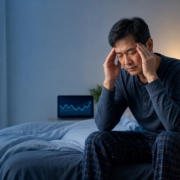
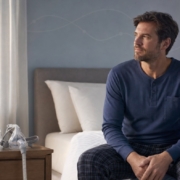
Short answer: Feeling sleepy after starting continuous positive airway pressure (CPAP) does not automatically mean that CPAP has failed. A clinician may first check whether the device is used during all sleep, whether mask leaks or pressure problems are allowing breathing events to continue, and whether another cause—such as insufficient sleep, medication effects, depression, or a different sleep disorder—is contributing. Persistent sleepiness deserves follow-up, especially when it affects driving, work, or daily safety.

What does “residual sleepiness” mean?

Residual excessive daytime sleepiness is ongoing difficulty staying alert during the day after obstructive sleep apnea (OSA) treatment has begun and the airway problem appears to be controlled. It is a symptom, not a diagnosis by itself. The American Academy of Sleep Medicine states that sleepiness is clinically important because it can affect health, performance, and safety, and should be identified and addressed.

CPAP uses mild air pressure to keep the upper airway open during sleep. The National Heart, Lung, and Blood Institute (NHLBI) notes that many people experience better sleep quality and less daytime sleepiness with CPAP. Still, response is not identical for everyone, and improvement may depend on consistent use and an effective setup.

Why might you still feel tired after CPAP?

1. CPAP is not being used for every sleep period

OSA-related breathing interruptions can return whenever CPAP is not worn. SleepApnea.org recommends using CPAP during every period of sleep, including naps. A 2025 meta-analysis of CPAP-treated patients also found that lower CPAP adherence was associated with residual excessive sleepiness. A device-reported “good night” should therefore be interpreted alongside how many hours the mask was actually worn and whether sleep continued after it was removed.

2. Mask leaks, discomfort, or settings are reducing treatment effectiveness

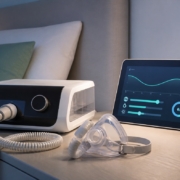
CPAP machines can track usage, breathing events, and mask leaks. Ongoing snoring or daytime tiredness may be a reason to ask whether the mask fit or pressure settings need review. The NHLBI advises working with a healthcare provider on mask comfort, humidification, and pressure adjustments rather than changing prescribed settings without guidance.

3. Total sleep time or sleep quality is still inadequate

CPAP treats sleep-related airway obstruction; it cannot replace adequate sleep. A clinician evaluating persistent sleepiness may ask about bedtime, wake time, awakenings, shift work, alcohol, caffeine, pain, and other factors that fragment or shorten sleep. This distinction matters because “tired,” “fatigued,” and “sleepy” can describe different experiences.

4. Another health or sleep issue may be contributing

Research guidance on residual sleepiness recommends looking for other possible causes before labeling symptoms as residual sleepiness from OSA. Depending on the individual, a healthcare professional may review medications, mood symptoms, restless legs, circadian rhythm problems, narcolepsy, or other medical conditions. A 2025 meta-analysis found associations between residual sleepiness and factors including more severe baseline sleepiness, depressive symptoms, and lower CPAP adherence, but these associations do not determine the cause in any one person.

What should you review before a follow-up appointment?

Bring a simple record of symptoms and treatment use. Useful questions and data may include:

  • How many hours is CPAP worn each night, and is it used for naps?
  • Does the mask come off during sleep?
  • Are leaks, dry mouth, congestion, pressure discomfort, or ongoing snoring present?
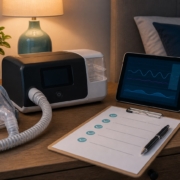
  • What do the machine’s usage, leak, and event summaries show?
  • How many hours of sleep are you actually getting?
  • When is sleepiness worst, and does it interfere with driving or work?
  • Have medications, body weight, sleep schedule, or other health conditions changed?

The NHLBI recommends regular checkups to confirm that sleep apnea treatment is working. A provider may review PAP data, address equipment issues, or decide whether repeat sleep testing is appropriate—for example, after a substantial weight change or when symptoms persist.

Where overnight oxygen trend monitoring fits

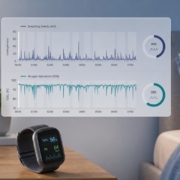
Overnight oxygen saturation trends can provide additional context for a discussion with a healthcare professional, but they do not show every breathing event and cannot establish whether CPAP pressure is correct. The ToronTek-B400 is a wristband pulse oximeter / sleep apnea monitor that records overnight SpO2 trends and produces software-generated SpO2 reports. Those reports may help a user organize observations to discuss with a clinician.

The ToronTek-B400 does not diagnose sleep apnea, measure all aspects of sleep, or replace CPAP machine data, a home sleep apnea test, laboratory polysomnography, or medical advice. Consumer oximetry readings can also be affected by motion, fit, circulation, and other factors, so isolated dips should not be self-diagnosed.

When should persistent sleepiness be treated as a safety concern?

Do not drive or perform safety-sensitive work when you feel too sleepy to stay alert. The NHLBI warns that untreated sleep apnea and daytime sleepiness can impair attention and decision-making while driving. If sleepiness is sudden, severe, worsening, or accompanied by other concerning symptoms, seek prompt medical guidance.

Frequently asked questions

How long does it take to feel less tired after starting CPAP?

Some people notice improvement quickly, while adjustment and symptom improvement take longer for others. Consistent use, effective mask fit, adequate sleep time, and the absence of another sleep or health problem all affect the response. Persistent symptoms should be reviewed rather than judged by a fixed deadline.

Does a low CPAP-reported AHI mean treatment is definitely working?

A device-reported apnea-hypopnea index can be useful, but it is only one part of treatment review. Usage hours, leaks, symptoms, the type of events reported, and clinical context also matter. Ask the treating provider to interpret the complete download if sleepiness continues.

Can medication treat residual daytime sleepiness?

Wake-promoting medicines are used in selected patients, and recent PubMed-indexed reviews discuss their role. They do not reopen a blocked airway or replace effective OSA treatment. Medication decisions require a sleep specialist or other qualified prescriber after treatment effectiveness and other causes of sleepiness have been assessed.

Can an overnight pulse oximeter tell whether CPAP needs adjustment?

No. A wrist-worn pulse oximeter can record SpO2 trends, but it cannot determine the cause of a change or prescribe CPAP settings. CPAP adjustments should be based on clinician review of symptoms, PAP data, and testing when needed.

Source and citation notes

  • SleepApnea.org: Tips for Sleeping With CPAP — CPAP consistency, common setup problems, machine data, and reasons to seek adjustment.
  • SleepApnea.org: CPAP Therapy for OSA — definition, benefits, side effects, and patient-oriented CPAP guidance.
  • NHLBI: CPAP — how CPAP works, benefits, side effects, equipment support, and data review.
  • NHLBI: Living With Sleep Apnea — follow-up, treatment monitoring, repeat testing context, and driving safety.
  • PubMed: Clinical characteristics of obstructive sleep apnoea patients with residual sleepiness — 2025 meta-analysis of characteristics associated with residual sleepiness.
  • PubMed/JCSM: Clinical significance of sleepiness—an AASM position statement — clinical and safety importance of recognizing sleepiness.
  • PubMed: Management options for excessive daytime sleepiness in patients with obstructive sleep apnea — specialist assessment and treatment context for residual sleepiness.

Disclaimer: This article is for educational and informational purposes only and is not intended as medical advice, diagnosis, or treatment. It should not replace guidance from a qualified healthcare professional. If you have symptoms, a medical condition, or concerns about your health, consult a licensed healthcare provider or seek urgent medical care when appropriate.

https://torontek.com/wp-content/uploads/2026/08/2026-07-28-still-tired-after-cpap-residual-sleepiness-featured-1.jpg 788 1400 Codex Open AI http://torontek.com/wp-content/uploads/2016/02/Torontek-homepage-300x300.jpg Codex Open AI2026-08-06 02:19:472026-08-06 02:19:49Still Tired After CPAP? What Residual Daytime Sleepiness Can Mean

Positional Sleep Apnea: Can Side Sleeping Reduce Breathing Events?

July 22, 2026/in Health/by Codex Open AI

Positional sleep apnea becomes more severe while sleeping on the back. Learn when side sleeping and positional therapy may complement professionally prescribed care.

Read more
https://torontek.com/wp-content/uploads/2026/07/2026-07-20-positional-sleep-apnea-side-sleeping-featured.jpg 788 1400 Codex Open AI http://torontek.com/wp-content/uploads/2016/02/Torontek-homepage-300x300.jpg Codex Open AI2026-07-22 02:11:292026-07-22 02:11:32Positional Sleep Apnea: Can Side Sleeping Reduce Breathing Events?

CPAP Alternatives for Sleep Apnea in 2026: What Patients Should Know

June 29, 2026/in Health/by Codex Open AI

CPAP remains a common sleep apnea treatment, but alternatives such as oral appliances, positional therapy, weight management, surgery, and implanted stimulation may fit selected patients.

Read more
https://torontek.com/wp-content/uploads/2026/06/2026-06-29-cpap-alternatives-sleep-apnea-2026-featured.jpg 788 1400 Codex Open AI http://torontek.com/wp-content/uploads/2016/02/Torontek-homepage-300x300.jpg Codex Open AI2026-06-29 16:41:522026-06-29 16:41:54CPAP Alternatives for Sleep Apnea in 2026: What Patients Should Know

Zepbound and Sleep Apnea: What the New Treatment Option Means for Overnight Oxygen Monitoring

June 22, 2026/in Health/by Codex Open AI

Zepbound is a newer prescription option for some adults with obstructive sleep apnea and obesity, but it does not replace CPAP, professional sleep testing, or clinician follow-up. Learn where overnight oxygen monitoring fits.

Read more
https://torontek.com/wp-content/uploads/2026/06/2026-06-22-zepbound-sleep-apnea-oxygen-monitoring-featured.jpg 788 1400 Codex Open AI http://torontek.com/wp-content/uploads/2016/02/Torontek-homepage-300x300.jpg Codex Open AI2026-06-22 17:06:382026-06-22 17:06:40Zepbound and Sleep Apnea: What the New Treatment Option Means for Overnight Oxygen Monitoring

Wearable Breathing Alerts and Sleep Apnea: When Should They Lead to a Home Sleep Test?

June 15, 2026/in Health/by Codex Open AI

Wearable Breathing Alerts and Sleep Apnea: When Should They Lead to a Home Sleep Test?

Short answer: If a wearable keeps flagging nighttime breathing disturbances, oxygen dips, loud snoring patterns, or unexplained poor sleep alongside symptoms like daytime sleepiness or morning headaches, that should usually lead to a conversation with a clinician about formal sleep apnea testing. Wearable alerts can support screening, but they do not diagnose sleep apnea on their own.

Why This Question Matters More in 2026

On May 26, 2026, Sleep Review reported that Resmed and Oura partnered to connect wearable sleep data with clinical care pathways. The article said Oura users with frequent nighttime breathing disturbances may be directed to Resmed educational and clinical resources, and it also cited a Resmed survey showing wearable sleep-technology use rising from 16% of adults in 2025 to 53% in 2026.

That shift reflects a practical reality: more people now arrive at a sleep-apnea question because a device flagged something first. The useful next question is not whether a wearable can replace medical testing. It is when the data should push someone toward a proper home sleep apnea test or in-lab sleep study.

What Wearable Breathing Alerts Usually Mean

Wearables and overnight oxygen monitors may flag repeated oxygen desaturations, nighttime breathing disturbances, pulse-rate changes, or sleep fragmentation patterns. These signals can suggest that something important is happening during sleep, especially when they recur over multiple nights.

However, those alerts are not the same as a diagnosis. Sleep apnea diagnosis depends on clinical context, symptom review, and formal measurement of breathing events during sleep. SleepApnea.org explains that diagnosis usually begins with symptoms, medical history, and risk factors, then is confirmed with a sleep study that measures breathing patterns and calculates the apnea-hypopnea index, or AHI.

When an Alert Should Lead to Medical Evaluation

A wearable alert is more meaningful when it appears together with classic sleep apnea symptoms or risk factors. Both NHLBI and SleepApnea.org describe common warning signs such as loud snoring, gasping or choking during sleep, witnessed breathing pauses, morning headaches, poor concentration, and excessive daytime sleepiness.

You should be more likely to seek formal evaluation when:

  • breathing or oxygen alerts repeat over several nights rather than appearing once,
  • someone has noticed loud snoring, gasping, or pauses in breathing,
  • you feel sleepy, foggy, or unrested during the day,
  • you already have risk factors such as obesity, high blood pressure, or family history, or
  • the device trend appears to be getting worse over time.

NHLBI says a healthcare provider may refer a patient for a sleep study to determine which type of sleep apnea is present and how serious it is. That step matters because treatment decisions depend on the full pattern, not only on oxygen changes.

What a Home Sleep Apnea Test Is and Is Not

A home sleep apnea test, often called an HSAT, is not the same thing as a general consumer wellness alert. The American Academy of Sleep Medicine says an HSAT is a medical assessment used to diagnose obstructive sleep apnea or evaluate treatment efficacy in appropriate adults. The AASM also says the need for an HSAT should be based on medical history and a clinical evaluation by a medical provider.

That distinction is important for people comparing medical testing with wearables. A home sleep apnea test is still part of clinical care. It is ordered, reviewed, and interpreted in a medical context.

Why a Wearable Still Cannot Make the Diagnosis

The AASM position statement is clear that diagnosis and treatment decisions must not be based only on automatically scored HSAT data, and that the raw data must be reviewed by a qualified physician. If that level of review is required even for a medical home sleep apnea test, then consumer wearables should be treated as screening or awareness tools rather than diagnostic tools.

Some people may also have poor sleep, low oxygen readings, or fragmented sleep for reasons other than obstructive sleep apnea. A device can point toward concern, but it cannot establish the cause by itself.

What the 2025 Research Says About Oximetry-Based Devices

A 2025 systematic review and meta-analysis indexed in PubMed evaluated oximetry-based devices against polysomnography, the gold-standard sleep test. The review found high sensitivity but lower specificity. In practical terms, that means these devices may be useful for screening in high-risk adults, but positive results still need confirmation through a gold-standard diagnostic method.

That finding supports a balanced interpretation. Wearable or oximetry-based alerts should not be ignored, especially in high-risk people. But they should also not be treated as a final answer.

Where the ToronTek-B400 Fits

The ToronTek-B400 is a wristband pulse oximeter and sleep apnea monitor that can help users track overnight oxygen saturation trends and review software-generated SpO2 reports. That makes it useful for practical monitoring, pattern review, and bringing clearer information into a clinical discussion.

Used appropriately, the B400 can help a user notice repeated overnight oxygen changes, compare trends across nights, and decide when the pattern deserves medical follow-up. It is not a substitute for a professional sleep study, and it should not be used to self-diagnose sleep apnea.

How to Use Wearable Data More Effectively

If your wearable or overnight monitor keeps raising concerns, the most useful next step is not guessing. It is organizing the information for clinical review. Keep notes on symptoms, how often the alerts happen, whether someone notices snoring or breathing pauses, and whether the pattern changes with body position, alcohol intake, illness, or weight changes.

That kind of pattern tracking can help a clinician decide whether a home sleep apnea test is appropriate or whether an in-lab sleep study would be a better fit.

Bottom Line

Wearable breathing alerts should be treated as a reason to ask a better medical question, not as a diagnosis. When repeated alerts line up with symptoms or risk factors, they can be a strong prompt to seek formal sleep apnea testing. The safest path is to use wearable data for awareness and monitoring, then move to clinician-guided sleep testing when the pattern suggests real concern.

FAQ

Can a wearable breathing alert diagnose sleep apnea?

No. It can highlight a possible problem, but diagnosis still requires clinical evaluation and formal sleep testing.

When should I ask for a home sleep apnea test?

Ask when breathing alerts or oxygen dips happen repeatedly and you also have symptoms such as loud snoring, daytime sleepiness, morning headaches, or witnessed breathing pauses.

What is the difference between a wearable alert and an HSAT?

A wearable alert is a consumer-facing signal. An HSAT is a medical assessment ordered and interpreted within clinical care to help diagnose obstructive sleep apnea in appropriate patients.

How can the ToronTek-B400 help without diagnosing sleep apnea?

The B400 can help users monitor overnight SpO2 trends and review software-generated reports, which may make symptom tracking and clinician conversations more specific and useful.

Sources Reviewed

  • Sleep Review Magazine: Resmed, Oura Partner to Connect Wearable Sleep Data with Clinical Care Pathways
  • SleepApnea.org: How Is Sleep Apnea Diagnosed?
  • NHLBI: Sleep Apnea: What Is Sleep Apnea?
  • NHLBI: Sleep Apnea Diagnosis
  • American Academy of Sleep Medicine: Clinical use of a home sleep apnea test: an updated American Academy of Sleep Medicine position statement
  • PubMed: Oximetry-based devices in diagnosis of obstructive sleep apnea: A systematic review and meta-analysis

Source note: patient forums and Reddit were not used for factual claims in this article.

Disclaimer: This article is for educational and informational purposes only and is not intended as medical advice, diagnosis, or treatment. It should not replace guidance from a qualified healthcare professional. If you have symptoms, a medical condition, or concerns about your health, consult a licensed healthcare provider or seek urgent medical care when appropriate.
https://torontek.com/wp-content/uploads/2026/06/2026-06-15-wearable-breathing-alerts-home-sleep-apnea-test-featured.jpg 900 1600 Codex Open AI http://torontek.com/wp-content/uploads/2016/02/Torontek-homepage-300x300.jpg Codex Open AI2026-06-15 17:11:562026-06-15 17:11:58Wearable Breathing Alerts and Sleep Apnea: When Should They Lead to a Home Sleep Test?

Can a Wearable or Pulse Oximeter Diagnose Sleep Apnea? What 2026 Monitoring Guidance Says

June 8, 2026/in Health/by Codex Open AI

Can a Wearable or Pulse Oximeter Diagnose Sleep Apnea? What 2026 Monitoring Guidance Says

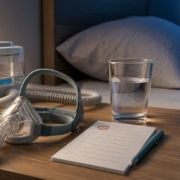
Short answer: No. A wearable device or overnight pulse oximeter can show oxygen saturation trends, pulse-rate changes, and repeated overnight dips that may support sleep apnea screening or help you discuss symptoms with a clinician. But sleep apnea diagnosis still requires clinical evaluation and a sleep study or home sleep apnea test interpreted by a qualified medical provider.

Why This Question Is Getting More Attention

Interest in consumer sleep technology is growing quickly. On May 26, 2026, Sleep Review reported that Resmed and Oura partnered to connect wearable sleep data with sleep-health education and clinical care pathways for users with frequent nighttime breathing disturbances. Sleep Review also reported that wearable sleep-tech use in a Resmed survey rose from 16% of adults in 2025 to 53% in 2026.

That trend helps explain why more people are asking whether a wrist-worn tracker, smart ring, or overnight pulse oximeter can answer the sleep apnea question on its own. The useful answer is more precise: these tools may help with awareness, screening, and follow-up, but they do not replace formal diagnosis.

What Sleep Apnea Is and What Diagnosis Requires

Sleep apnea is a sleep-related breathing disorder in which breathing repeatedly stops or becomes shallow during sleep. In obstructive sleep apnea, the upper airway narrows or collapses during sleep. SleepApnea.org and NHLBI both explain that diagnosis usually starts with symptoms, risk factors, medical history, and a sleep study.

NHLBI says a healthcare provider may refer a patient for a sleep study to help determine what type of sleep apnea is present and how serious it is. That matters because treatment decisions depend on more than oxygen data alone. A diagnostic study can evaluate breathing events, oxygen levels, heart rate, and other signals together.

What a Wearable or Overnight Pulse Oximeter Can Show

A pulse oximeter estimates peripheral oxygen saturation, often called SpO2. During sleep, a monitoring device may show repeated oxygen dips, the lowest overnight oxygen level, average oxygen level, pulse-rate changes, and how much time was spent below a threshold. Those patterns can be useful when symptoms such as loud snoring, witnessed breathing pauses, waking up gasping, morning headaches, or daytime sleepiness are also present.

In practical terms, an overnight report can help a patient move from a vague concern to a more informed medical conversation. Instead of saying only “I feel tired,” a person may be able to discuss repeated oxygen desaturations, clustering of dips, or changing overnight trends.

What These Devices Cannot Confirm

Oxygen drops are not specific to obstructive sleep apnea. They may also reflect other breathing or medical issues, measurement limitations, motion artifact, altitude exposure, or unrelated sleep disruption. A wearable may miss clinically relevant events, and a normal-looking night does not rule out sleep-disordered breathing.

The American Academy of Sleep Medicine draws an even stricter line for home sleep apnea testing, which is a medical assessment rather than a consumer wellness feature. In its updated position statement, the AASM says diagnosis and treatment decisions must not be based solely on automatically scored home sleep apnea test data and that the raw data must be reviewed and interpreted by a qualified physician. If that level of review is required for a medical home sleep apnea test, consumer wearables and standalone oximetry reports should be treated even more cautiously.

What Recent Research Says About Oximetry Screening

A 2025 systematic review and meta-analysis indexed in PubMed concluded that oximetry-based devices may be considered for screening in high-risk individuals, as long as positive results are confirmed by a gold-standard diagnostic method. That is an important distinction. Screening means a device may help flag concern. Diagnosis means a clinician confirms what condition is present, how severe it is, and what treatment is appropriate.

So the evidence supports a practical middle ground: overnight oximetry can be useful, especially when symptoms or risk factors already point toward possible sleep apnea, but it should be used to support next steps rather than to replace them.

Where the ToronTek-B400 Fits

The ToronTek-B400 is a wristband pulse oximeter that helps users monitor overnight oxygen saturation trends and review software-generated SpO2 reports. In the context of sleep apnea education, that can be helpful for spotting repeated overnight oxygen changes, reviewing trend patterns, and preparing better questions for a healthcare provider.

It is important to use the B400 in the right role. It is not a diagnostic substitute for a professional sleep study, and it should not be used to self-diagnose sleep apnea. Its strongest use is practical monitoring: seeing trend patterns over time, understanding what to bring to a clinical conversation, and following overnight oxygen changes once a provider is already involved.

When to Ask for Clinical Evaluation

Ask a healthcare provider about sleep apnea if overnight monitoring concerns appear alongside loud snoring, choking or gasping during sleep, witnessed pauses in breathing, resistant high blood pressure, morning headaches, poor concentration, or daytime sleepiness. NHLBI notes that a provider will also consider symptoms, risk factors, and family history when deciding whether a sleep study is needed.

If oxygen readings are very low, symptoms are severe, or there are urgent warning signs such as chest pain, confusion, severe shortness of breath, or blue lips, seek prompt medical care instead of waiting for routine follow-up.

Bottom Line

A wearable or overnight pulse oximeter can be a useful sleep apnea screening and monitoring tool, but it cannot diagnose sleep apnea by itself. The safest way to use overnight oxygen data is as a signal for action: review the trend, connect it with symptoms, and take it to a qualified clinician who can decide whether formal sleep testing is needed.

FAQ

Can a pulse oximeter diagnose sleep apnea?

No. A pulse oximeter can show oxygen saturation trends that may support screening or follow-up, but diagnosis requires clinical evaluation and formal sleep testing.

Can a wearable detect signs that should lead to a sleep study?

Yes, sometimes. Repeated overnight oxygen dips or breathing-disturbance alerts may support a conversation with a clinician, especially when symptoms or risk factors are already present.

Why is a sleep study still necessary?

A sleep study helps determine whether sleep apnea is actually present, what type it is, and how severe it is. Treatment decisions depend on that fuller clinical picture.

How can the ToronTek-B400 be useful if it does not diagnose sleep apnea?

The B400 can help users monitor overnight SpO2 trends and review software-generated reports, which may make symptom tracking and healthcare conversations more specific and productive.

Sources Reviewed

  • Sleep Review Magazine: Resmed, Oura Partner to Connect Wearable Sleep Data with Clinical Care Pathways
  • SleepApnea.org: How Is Sleep Apnea Diagnosed? Tests and Screening
  • NHLBI: Sleep Apnea Diagnosis
  • American Academy of Sleep Medicine: Clinical use of a home sleep apnea test: an updated American Academy of Sleep Medicine position statement
  • PubMed: Oximetry-based devices in diagnosis of obstructive sleep apnea: A systematic review and meta-analysis

Source note: patient forums and Reddit were not used for factual claims in this article.

Disclaimer: This article is for educational and informational purposes only and is not intended as medical advice, diagnosis, or treatment. It should not replace guidance from a qualified healthcare professional. If you have symptoms, a medical condition, or concerns about your health, consult a licensed healthcare provider or seek urgent medical care when appropriate.
https://torontek.com/wp-content/uploads/2026/06/wearable-sleep-apnea-oximetry-what-it-can-show-featured.jpg 1066 1600 Codex Open AI http://torontek.com/wp-content/uploads/2016/02/Torontek-homepage-300x300.jpg Codex Open AI2026-06-08 15:28:522026-06-08 15:28:54Can a Wearable or Pulse Oximeter Diagnose Sleep Apnea? What 2026 Monitoring Guidance Says

Overnight Oxygen Drops and Sleep Apnea: What SpO2 Trends Can and Cannot Tell You

June 8, 2026/in Health/by Codex Open AI

Overnight Oxygen Drops and Sleep Apnea: What SpO2 Trends Can and Cannot Tell You

Short answer: Overnight oxygen drops can be a useful clue when sleep apnea is suspected, especially when they appear alongside snoring, witnessed breathing pauses, morning headaches, or daytime sleepiness. But oxygen saturation patterns alone cannot diagnose sleep apnea. A clinician usually confirms sleep apnea with a sleep study that measures breathing, oxygen levels, heart rate, sleep stages, and related signals.

Why Overnight Oxygen Drops Matter in Sleep Apnea

Sleep apnea is a sleep-related breathing disorder in which breathing repeatedly stops or becomes shallow during sleep. In obstructive sleep apnea, the upper airway narrows or collapses during sleep. The American Academy of Sleep Medicine describes obstructive sleep apnea as involving repeated breathing disruptions that can cause abrupt reductions in blood oxygen saturation.

For many people, the first visible clue is not the breathing event itself. It is the pattern that follows: oxygen saturation dips, pulse rate changes, sleep disruption, and unrefreshing sleep. This is why overnight SpO2 trends are often discussed by people who suspect sleep apnea or are already using CPAP, oral appliance therapy, or another treatment.

What SpO2 Trends Can Show

SpO2, or peripheral oxygen saturation, estimates how much oxygen your blood is carrying. During healthy sleep, oxygen levels are usually relatively stable. In sleep apnea, oxygen may drop repeatedly when breathing is reduced or paused. SleepApnea.org explains that sleep studies may consider oxygen saturation along with the apnea-hypopnea index, arousals, sleep architecture, and other information when a clinician forms a diagnosis and treatment plan.

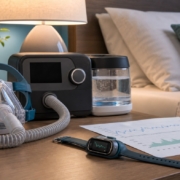
An overnight oximetry report may help show patterns such as repeated oxygen dips, minimum oxygen saturation, average oxygen saturation, pulse-rate changes, and how much time was spent below a threshold. These patterns can help a patient have a more specific conversation with a healthcare provider.

What SpO2 Trends Cannot Show

SpO2 trends are not the same as a sleep apnea diagnosis. Oxygen can drop for reasons other than obstructive sleep apnea, including lung disease, altitude exposure, medication effects, central breathing problems, or other medical conditions. Some people can also have sleep-disordered breathing with sleep fragmentation even when oxygen drops are mild or inconsistent.

The NHLBI notes that sleep apnea diagnosis usually starts with symptoms, risk factors, medical history, and a sleep study. A sleep study can identify the type and severity of sleep apnea by monitoring breathing and oxygen levels along with other measurements. That broader context is why a clinician should interpret oxygen data rather than treating a single number as the whole answer.

How Oximetry Fits Into Screening

A 2025 systematic review and meta-analysis indexed in PubMed concluded that oximetry-based devices may be considered for screening in high-risk individuals, provided that positive results are confirmed by a gold-standard diagnostic method. That is a practical way to think about overnight oxygen monitoring: it can be a useful screening and tracking signal, but it is not a replacement for professional diagnosis.

For people who already have symptoms, an overnight oxygen report may make the next healthcare visit more productive. Instead of saying only “I sleep badly,” a person may be able to discuss repeated oxygen dips, pulse-rate changes, or time spent below a certain oxygen level. Those details may help a clinician decide whether a lab sleep study or home sleep apnea test is appropriate.

When to Ask a Healthcare Provider About Sleep Apnea

Consider speaking with a healthcare provider if overnight oxygen drops appear together with loud snoring, choking or gasping during sleep, witnessed breathing pauses, morning headaches, dry mouth, high blood pressure, trouble concentrating, or daytime sleepiness. SleepApnea.org and NHLBI both emphasize that symptoms, risk factors, and sleep-study data are part of the diagnostic process.

If oxygen levels are very low, symptoms are severe, or there are chest pain, blue lips, severe shortness of breath, confusion, or other urgent symptoms, seek medical care promptly rather than waiting for a routine sleep appointment.

Where the ToronTek-B400 Fits

The ToronTek-B400 Sleep Apnea Monitor is a wristband pulse oximeter designed to help users monitor overnight oxygen saturation trends and review software-generated SpO2 reports. In an educational sleep apnea context, that can be helpful for noticing patterns and preparing questions for a healthcare provider.

It is important to use the B400 appropriately: a wristband pulse oximeter can record oxygen and pulse trends, but it does not diagnose sleep apnea, classify the type of sleep apnea, or replace a professional sleep study. Its best role is supporting awareness, tracking, and more informed conversations with a qualified clinician.

Treatment Still Depends on Diagnosis

If a sleep study confirms sleep apnea, treatment depends on the type, severity, symptoms, and medical history. NHLBI describes treatment options that may include lifestyle changes, positive airway pressure therapy, oral devices, and other approaches to keep the airway open during sleep. Sleep Foundation notes that CPAP is commonly prescribed for obstructive sleep apnea, while other PAP modes, oral appliances, or surgical options may be considered in specific situations.

The key point is simple: oxygen data can help raise the question, but diagnosis guides treatment. The safest next step after concerning overnight oxygen trends is to bring the report to a healthcare professional.

FAQ

Can overnight oxygen drops diagnose sleep apnea?

No. Overnight oxygen drops can support screening and discussion, but sleep apnea diagnosis usually requires a sleep study interpreted by a healthcare professional.

What is AHI?

AHI stands for apnea-hypopnea index. It estimates how many apnea and hypopnea events occur per hour of sleep or recording time. Oxygen saturation is often considered alongside AHI and other sleep-study findings.

What should I do if my overnight oxygen report looks abnormal?

Save the report and discuss it with a healthcare provider, especially if you also have snoring, witnessed breathing pauses, daytime sleepiness, morning headaches, or cardiovascular risk factors.

Can CPAP improve oxygen drops caused by sleep apnea?

For many people with obstructive sleep apnea, positive airway pressure therapy helps keep the airway open during sleep. Treatment choice should be based on professional diagnosis and follow-up.

Sources Reviewed

  • SleepApnea.org: How Is Sleep Apnea Diagnosed? Tests and Screening
  • SleepApnea.org: Apnea Hypopnea Index (AHI) for Sleep Apnea
  • NHLBI: Sleep Apnea Diagnosis
  • NHLBI: Sleep Apnea Treatment
  • American Academy of Sleep Medicine: Obstructive Sleep Apnea Fact Sheet
  • Sleep Foundation: Sleep Apnea Treatment: CPAP, Oral Appliances, and Surgery
  • PubMed: Oximetry-based devices in diagnosis of obstructive sleep apnea: A systematic review and meta-analysis

Disclaimer: This article is for educational and informational purposes only and is not intended as medical advice, diagnosis, or treatment. It should not replace guidance from a qualified healthcare professional. If you have symptoms, a medical condition, or concerns about your health, consult a licensed healthcare provider or seek urgent medical care when appropriate.
https://torontek.com/wp-content/uploads/2026/06/overnight-oxygen-monitoring-sleep-apnea-featured.jpg 800 1200 Codex Open AI http://torontek.com/wp-content/uploads/2016/02/Torontek-homepage-300x300.jpg Codex Open AI2026-06-08 03:01:462026-06-08 15:17:34Overnight Oxygen Drops and Sleep Apnea: What SpO2 Trends Can and Cannot Tell You
Page 2 of 212

Check our Facebook page

Products

  • ToronTek-L12 Pulse OximeterToronTek All Rights Reserved ToronTek-L12 Pulse Oximeter With Recording App
    Rated 5.00 out of 5
    $49.95
  • Fetal doppler with upsized Gel-ToronTek w 250 ml bottle of Gel Fetal doppler with upsized Gel-ToronTek-R88+250 ml Gel $79.95 Original price was: $79.95.$74.95Current price is: $74.95.
  • Fetal Doppler-ToronTek-R88-Canadian technology Fetal doppler-ToronTek-R88+60 gr Gel $74.95 Original price was: $74.95.$69.95Current price is: $69.95.
  • Sleep apnea monitor- ToronTek-B400 Sleep apnea monitor-ToronTek-B400
    Rated 4.83 out of 5
    $175.00 Original price was: $175.00.$150.00Current price is: $150.00.
  • ToronTek-G64+ a Canadian Oximeter ToronTek-G64+ Pulse Oximeter
    Rated 4.83 out of 5
    $44.95

Our writers’ topics

  • Breastfeeding (1)
  • Delivery (1)
  • Health (29)
  • Health and wellness tip (16)
  • News (2)
  • Personal (4)
  • Pregnancy (79)
    • Child birth (15)
    • Fertility (2)
    • Miscarriage (6)
    • Pegnancy tips (40)
  • Pregnancy Problem (13)
  • Respiratory (13)
  • Sleep related (3)
  • Uncategorized (4)
  • Facebook
  • YouTube
  • Instagram
© Copyright - GloCommerce Inc
  • Link to Facebook
  • Link to Youtube
  • Link to Instagram
Scroll to top Scroll to top Scroll to top