
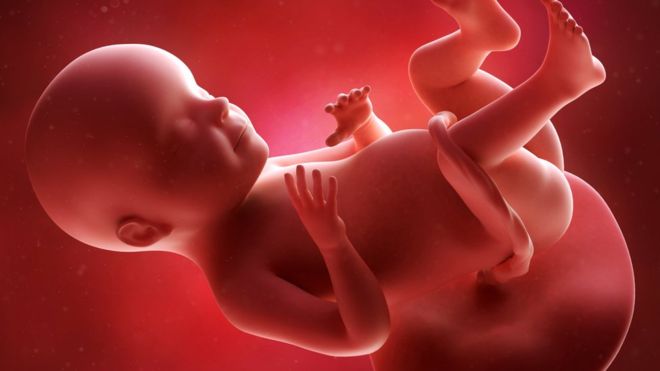
Amazing Facts About Your Unborn Baby
When you think about it, pregnancy is an amazing thing. You are growing a life, a child inside your body. It’s incredible. However, there is also some kind of strange things about pregnancy, some of which are kind of gross and others that are just a bit unusual.
12 Amazing Pregnancy Facts
-
Unborn babies can feel, see, and hear
When people bump into you, can your baby feel the knocks inside your womb? Babies have a sense of touch and respond to being stimulated within the uterus from about 17 weeks, but your body is clever and protects your baby from bumps.
-
Second trimester onwards, babies pee in the uterus. Then they drink it.
By about 12 weeks, your baby is producing urine. It can be seen swallowing amniotic fluid, which is digested and filtered by the kidneys and urinated back into the uterus.A fully formed baby in the womb is known as a fetus. Between fourteen and fifteen weeks of pregnancy, the external genitalia of the baby is more developed, and on the scan, they can be seen to suck their thumbs. As the uterus grows it presses on the bladder and mums find they need to pee more often.
3. Your baby is growing more bones than you
By the time your baby is born, it will have 300 bones in that tiny body – but adults only have 206! The bones in your baby’s body will fuse together to create the adult number. This is because babies have more cartilage than bone. A baby’s skeleton is mostly made up of cartilage. As a person grows up, most of this cartilage turns into bone in a process called ossification.
-
Babies cry in the womb
A baby’s first cry may happen in the womb long before its arrival in the delivery room. New research shows that fetuses may learn to express their displeasure by crying silently while still in the womb as early as in the 28th week of pregnancy.
-
Babies can taste what the mother is eating
Very early. Research shows that what a woman eats during pregnancy not only nourishes her baby in the womb but may shape food preferences later in life. At 21 weeks after conception, a developing baby weighs about as much as a can of Coke — and he or she can taste it, too.
-
A woman’s uterus expands to more than 500 times its normal size
Think of your uterus as a stretchy rubber balloon that expands on an as-needed basis. This muscular organ is located above the bladder and in front of the rectum. It is held in place by strong ligaments, and it is remarkably elastic, stretching to about 500 times its prepregnancy size. It grows in weight too, from a couple of ounces to more than 2 pounds. When your pregnancy is over, the uterus returns to its original size.
-
A fetus acquires fingerprints at the age of three months
A fetus acquires fingerprints at the age of three months. When only a small fraction of the way through its development, a fetus will have already developed one of the uniquely human traits: fingerprints.By the time a fetus is six months old and approximately 12 inches in size, his fingerprints and footprints are fully developed. The ridges on a fetus’s fingertips have formed three main patterns by this time, categorized as arches, loops, and whorls, with numerous patterns in between. These patterns are found on the fingertips, palms, and soles and are used to grasp things.
8. Your baby is learning a language
Sensory and brain mechanisms for hearing are developed at 30 weeks of gestational age. A new study shows that unborn babies are listening to their mothers’ talk during the last 10 weeks of pregnancy and at birth can demonstrate what they’ve heard. Babies only hours old are able to differentiate between sounds from their native language and a foreign language, scientists have discovered. The study indicates that babies begin absorbing language while still in the womb, earlier than previously thought.
-
Your baby’s heart is incredible
That precious heart takes hold and changes the world. From the development in the womb to the times when something can go wrong, baby’s heart is an amazing muscle that means more than many can even imagine. It controls the blood flow, and might even give a clue to the baby’s gender.
-
The lungs are the last organs to develop in the baby
The lungs are some of the last organs to develop in your baby’s body during the prenatal stage. Some important parts of their lungs don’t develop until the end of pregnancy.If your baby is born prematurely, their lungs may not have time to develop fully. This can lead to a variety of breathing disorders.
-
Contractions don’t stop after birth. The muscle cramps are the body’s way of stopping excess blood loss.
After the delivery of the baby, the muscles of the uterus normally tighten, or contract, to deliver the placenta. The contractions also help compress the blood vessels that were attached to the placenta. The compression helps prevent bleeding. If the muscles of the uterus don’t contract strongly enough, the blood vessels can bleed freely. This leads to excessive bleeding or hemorrhage.
-
He might be a dreamer
Babies start to sleep for 4 weeks after conception. But what’s more, the REM sleep waves associated with the eye movements of dreams have been identified by 30 weeks after conception. So your little one might even be having a dream or two.
“A baby fills a place in your heart that you never knew was empty”
The information, including but not limited to, text, graphics, images and other material contained on this website are for informational purposes only. The purpose of this website is to promote broad consumer understanding and knowledge of various health topics. It is not intended to be a substitute for professional medical advice, diagnosis or treatment. Always seek the advice of your physician or another qualified healthcare provider with any questions you may have regarding a medical condition or treatment and before undertaking a new health care regimen, and never disregard professional medical advice or delay in seeking it because of something you have read on this website.
Resources:
https://www.netmums.com/pregnancy/12-amazing-facts-about-your-unborn-baby


Leave a Reply
Want to join the discussion?Feel free to contribute!